Showing posts with label International Travel. Show all posts

Sunday, August 2, 2026

Mountbatten Bungalow • Kandy . Sri Lanka • Travel and Leisure (South East Asia)

For a Real Taste of Kandy, Venture Off the Tea Trails

Sri Lanka's Hill Country is renowned for its tea, but Kandy in the Cultural Triangle is much more than the sum of its leaves.
For a Real Taste of Kandy, Venture Off the Tea Trails
Courtesy of Mountbatten Bungalow

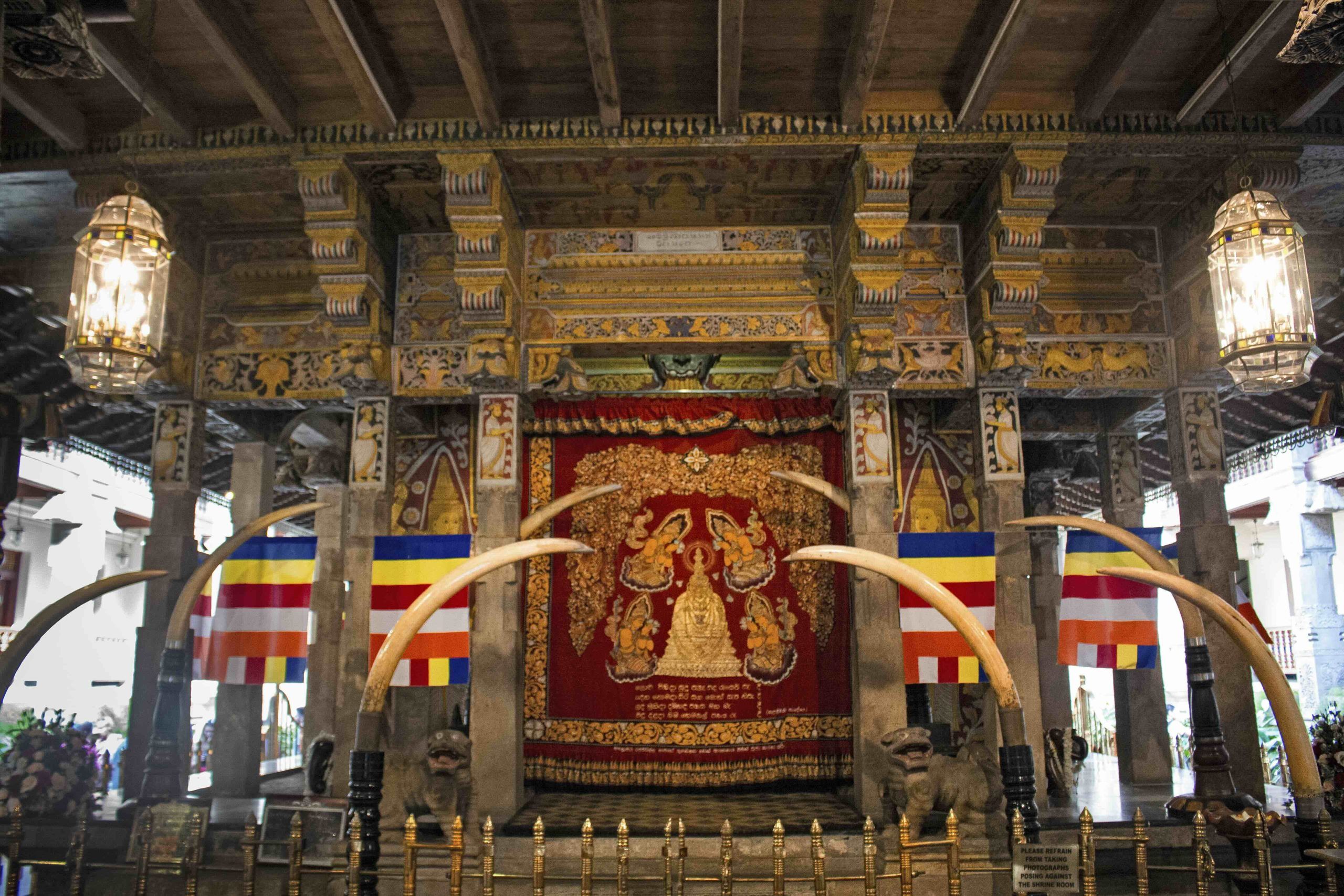
IN SRI LANKA, each full moon day—Poya—is a public holiday to commemorate an event in the life of Buddha. On these offering days, it is auspicious for Buddhist practitioners to visit a temple, especially a revered one like Temple of the Sacred Tooth Relic in Kandy, known locally as Sri Dalada Maligawa. I feel privileged to visit this hallowed Buddhist shrine, a source of pride and identity for Sinhalese people.

I’ve come to Kandy—the southern point of Sri Lanka’s famed Cultural Triangle—to experience a taste of its ancient and modern history, of its royal Buddhist heritage, and the British colonial era, and to meet local people along the way.
Temple of the Tooth
Kandy

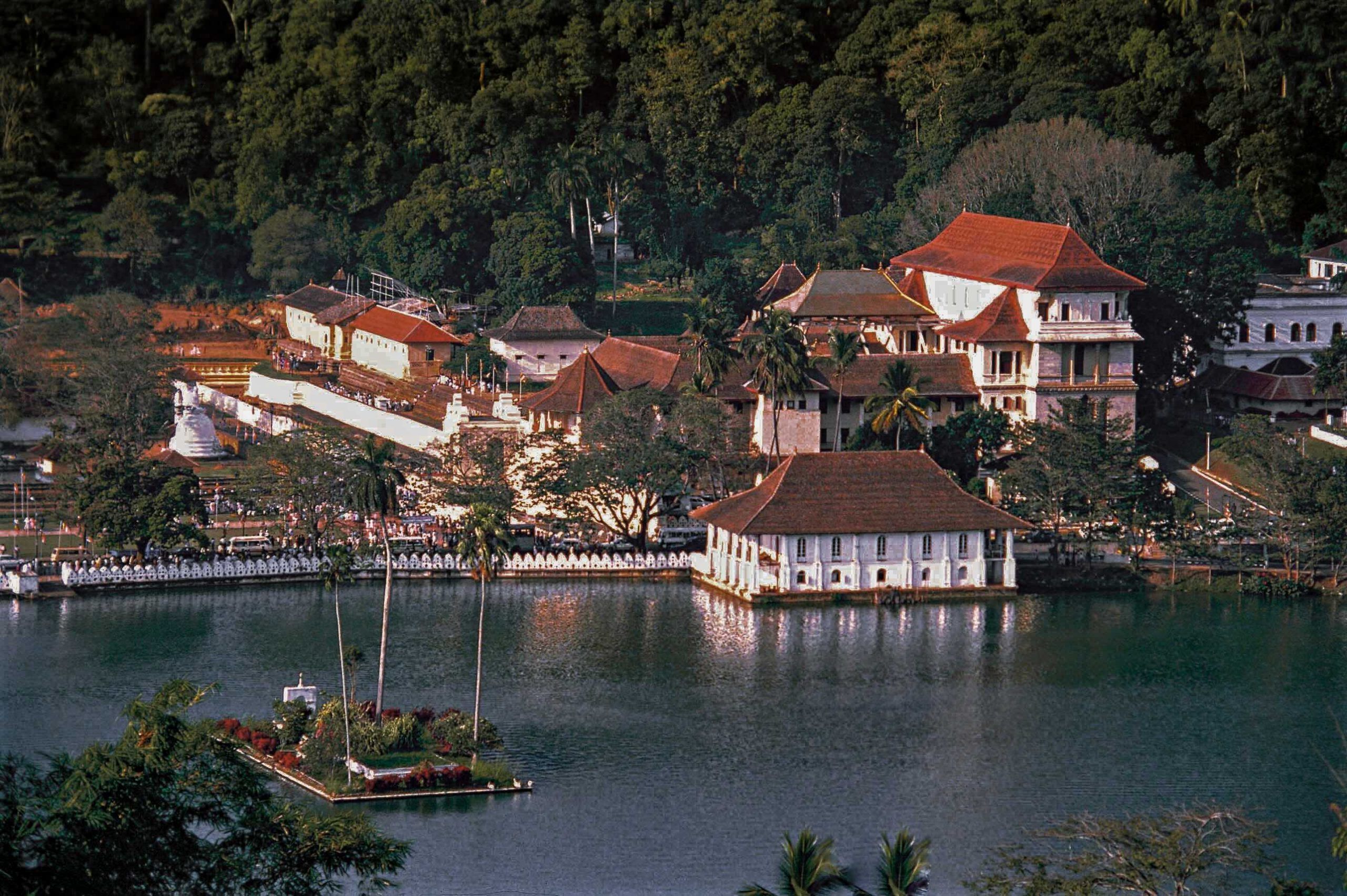
Streaming down the pathway leading to the Royal Palace Complex of the former Kingdom of Kandy, established in the 16th century AD, are hundreds of devotees, most of them dressed in white finery. Like a foaming wave, they flow towards the dazzling chalk-white walls that resemble floating clouds, the carved wooden pillars and gilded dome over the shrine, the Golden Canopy.

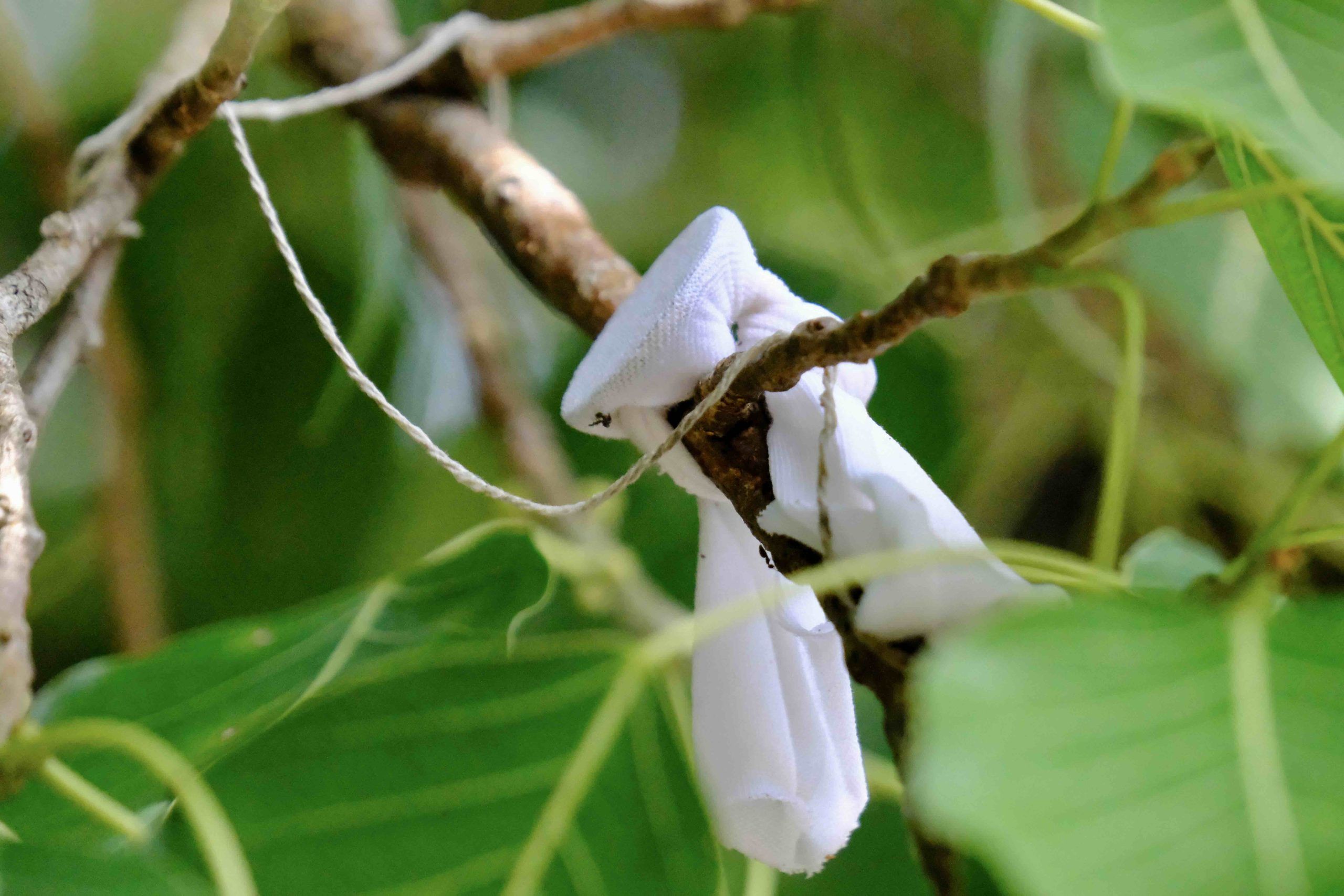
Extended families visit together, with girls dressed carefully, with flowers in their hair, golden earrings and frilly white dresses. To accumulate merit, seekers offer incense, light oil lamps, or present lotus or jasmine flowers at the shrine. Carrying pottery jars of water, some walk around the Bodhi tree three times, or tie offerings to the branches. A coin wrapped in white cloth catches my eye and I wonder if it symbolizes someone’s need for Sri Lankan rupees, or gratitude for answered petitions.
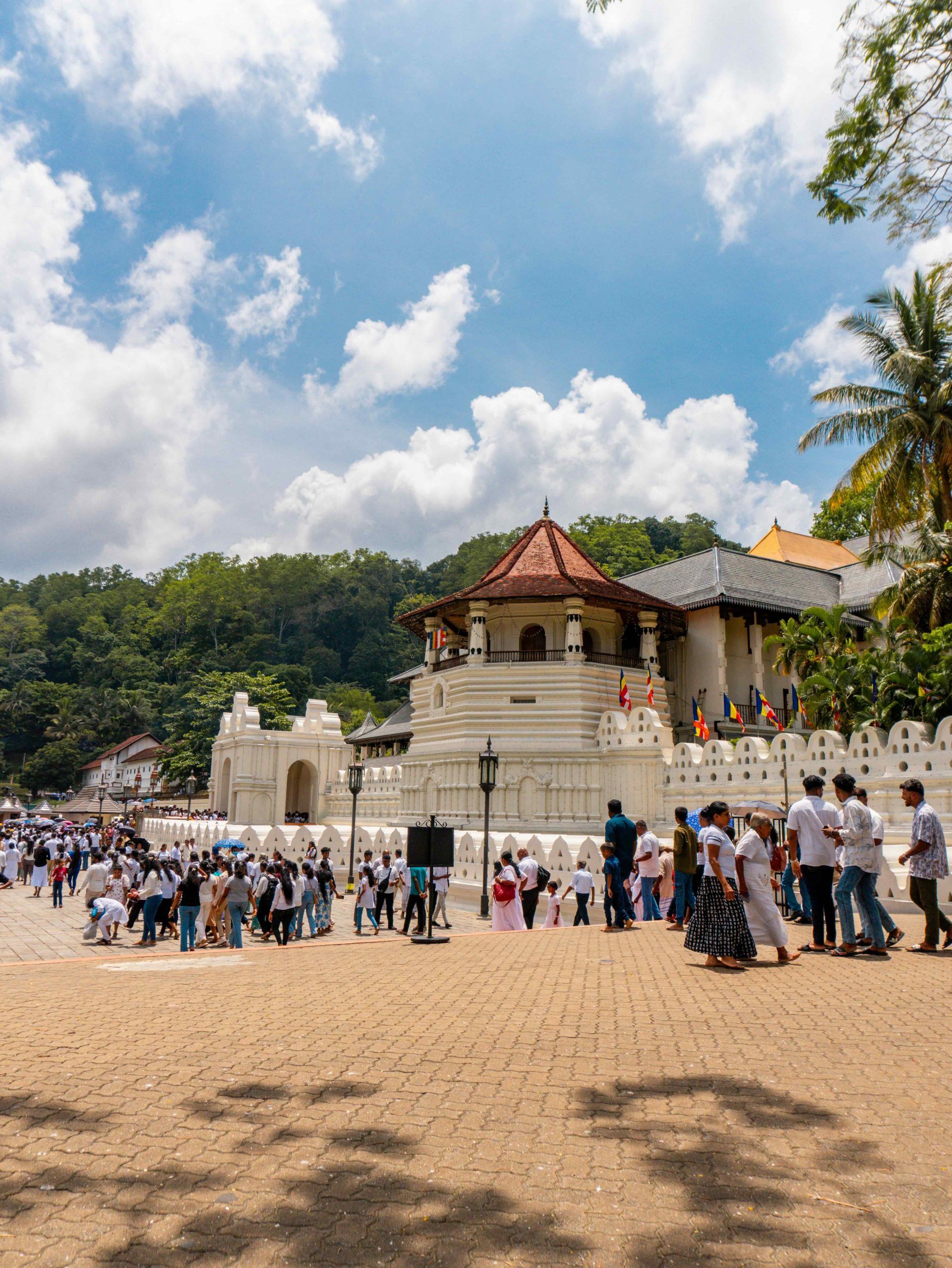
People dressed in white at the Temple of the Tooth
People dressed in white at the Temple of the Tooth | Image credit: Ajai S via Unsplash
A coin wrapped on a branch in the Bodhi tree
A coin wrapped on a branch in the Bodhi tree | Image credit: Gillian Mclaren

The atmosphere is one of joyful respect and anticipation. I’m struck by the sincerity and intensity of devotion of the pilgrims, as they pray and meditate in front of images from the life of Buddha. Temple musicians—the energetic Hewisi drummers and horanewa (traditional oboe) players—wear distinctive, centuries-old Kandyan ceremonial attire. Bare-chested, as a symbol of humility and respect, they wear a white sarong—dhoti—for purity, with a vibrant red cummerbund—patia—for celebration and royal heritage, plus a white turban—talappa—which is tightly wrapped so it stays on during the high-tempo movements.

Outside the temple precincts, after my immersion in ancient practices, I stroll along the edge of Kandy Lake—Kiri Muhuda. A courting couple takes a boat ride. A candy-floss salesman leans against the trunk of one of the rain trees introduced during the British colonial period. These massive trees, with umbrella-shaped canopies, line the walking path, providing shade and habitat for egret and fruit bat, the flying foxes. Above me a white-bellied sea eagle soars, the largest raptor in Sri Lanka. Business booms for flower sellers on this Poya day. A cluster of teenage girls smile shyly when I ask if I may photograph them, then collapse in giggles as I show them the images and mention how pretty each one is.
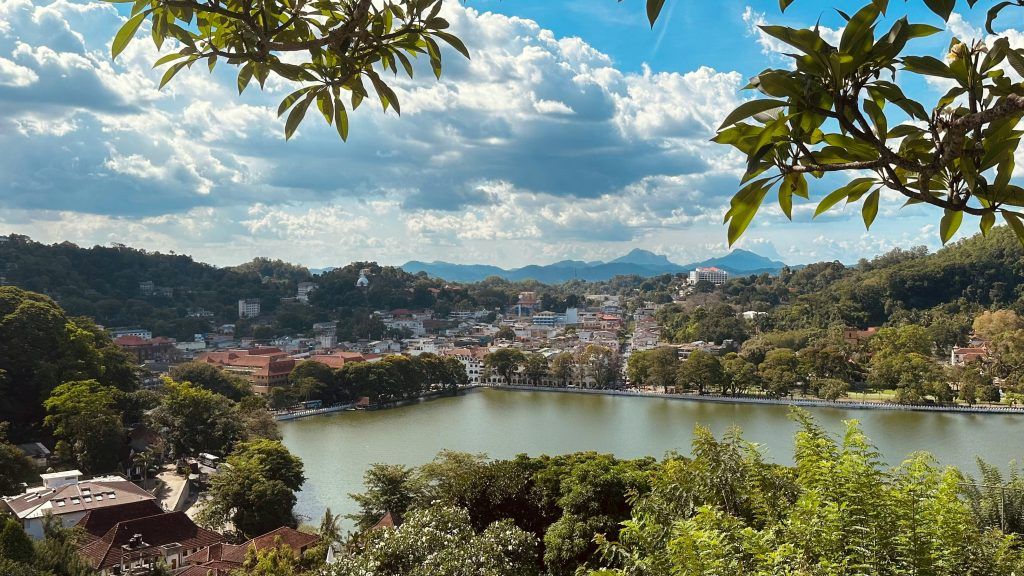
Kandy Lake
Kandy Lake | Image credit: Aravindhan Sathiyanathan

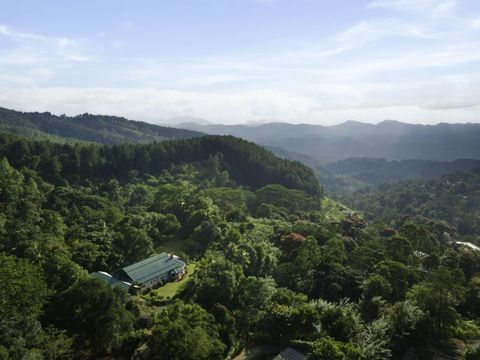
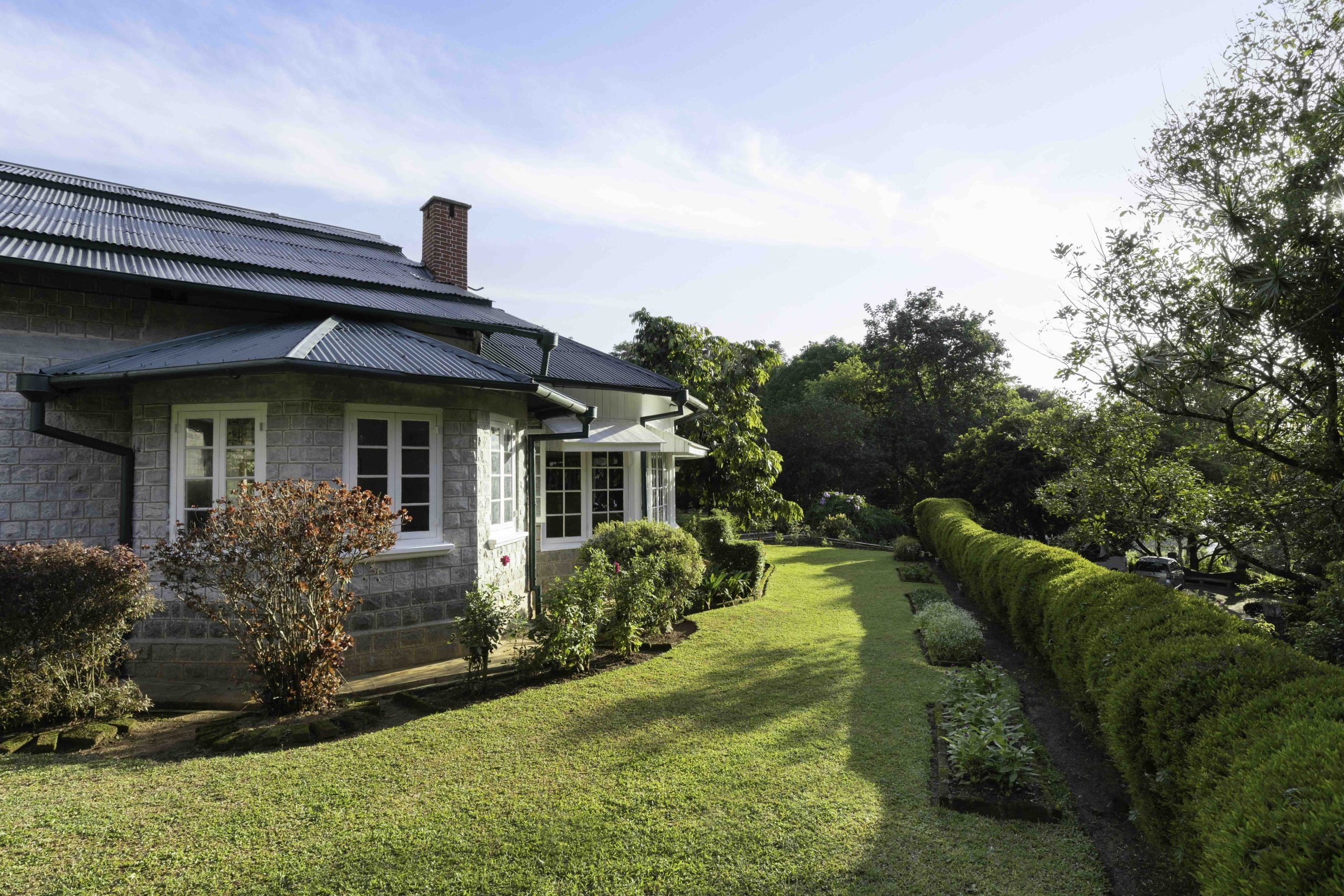
A short drive from Kandy city centre, up a narrow winding road of the Hanthana Mountain range, away from the city bustle, is Mountbatten Bungalow, part of the family-owned Thema Collection. It offers me a glimpse into the exclusive nature of the colonial-era lifestyle, where British gentry could retreat to this Hill Country to escape the summer heat and dusty dryness of cities in lower altitudes.

Lord Louis Mountbatten lived here during World War II, when commanding from Kandy and Peradeniya. The Victorian-era building is set in five acres of immaculate gardens, with ornamental flower beds, mature trees of Montane forestland, near tea plantations. Guests have the choice of two suites and four bungalow rooms in the main building, and six garden chalets.
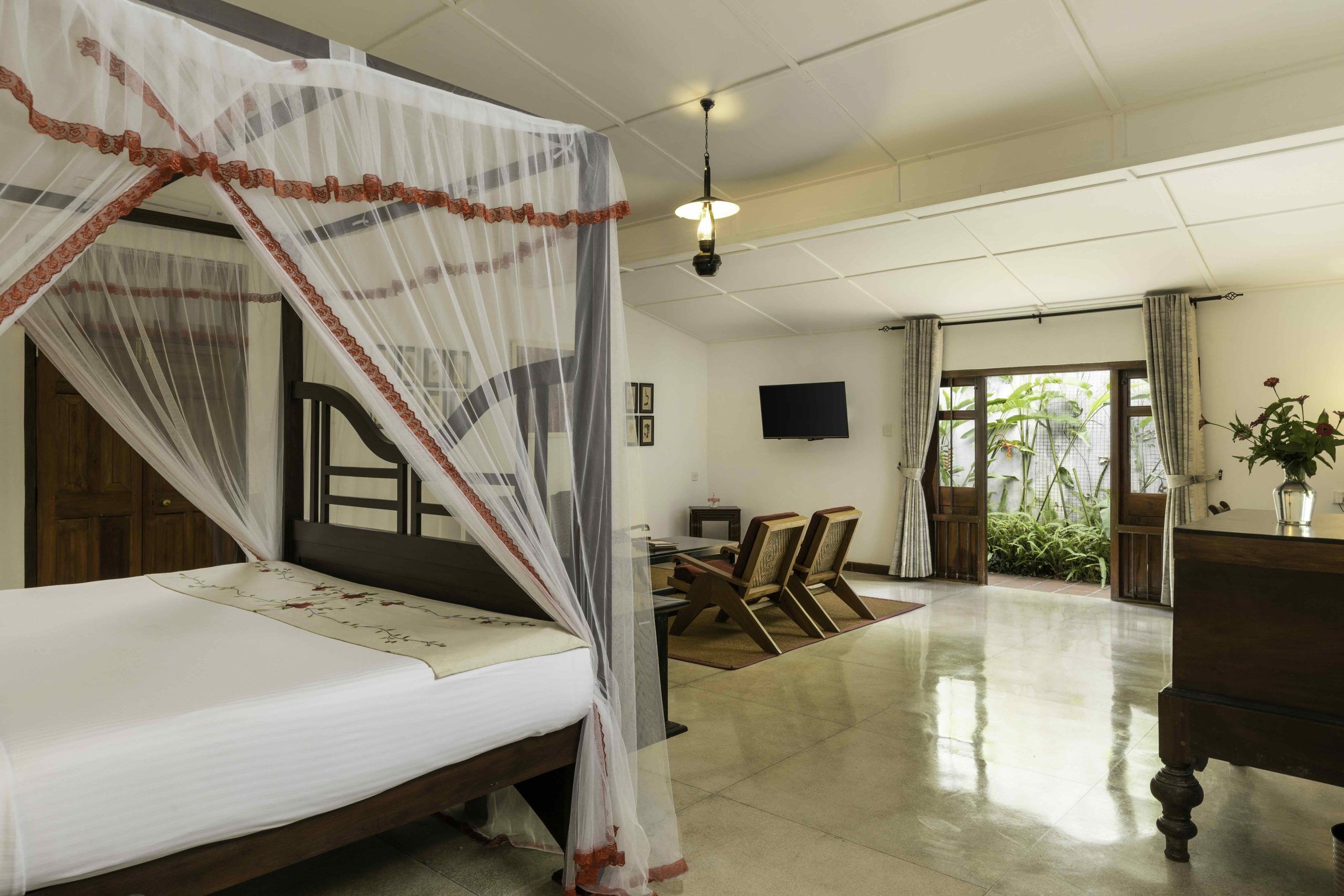
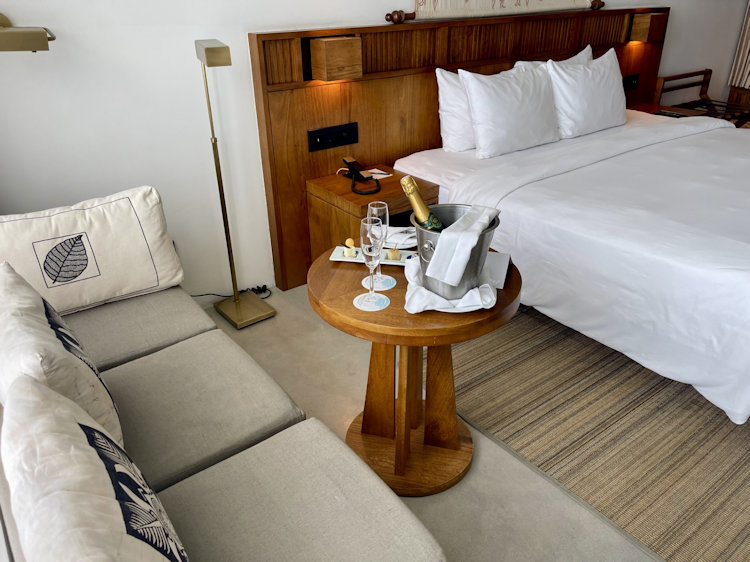
Suite bedroom
Suite bedroom | Courtesy of Mountbatten Bungalow
Gardens
Gardens | Courtesy of Mountbatten Bungalow
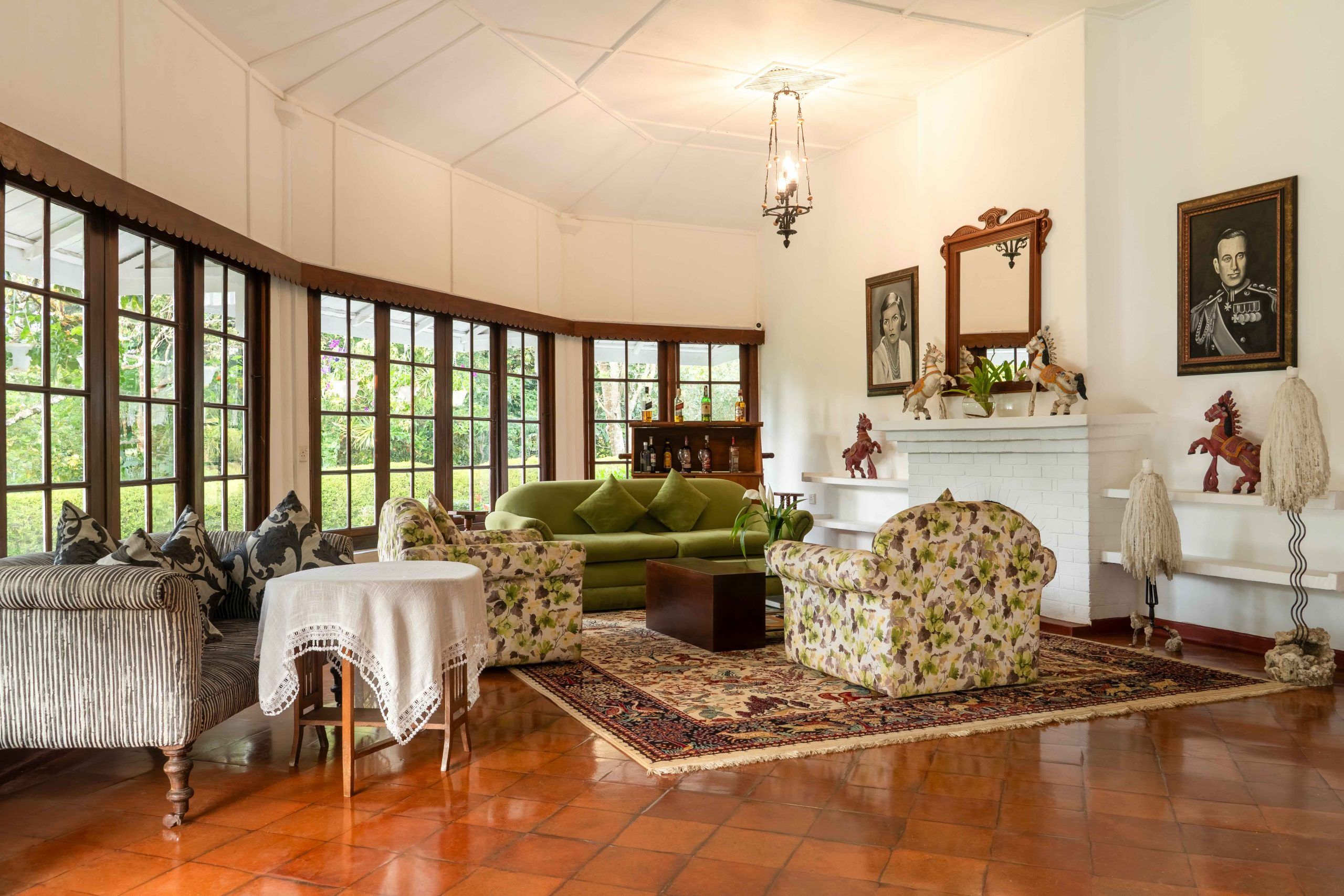
Living room
Living room | Courtesy of Mountbatten Bungalow

My suite is capacious, with a four-poster bed dressed in hand-embroidered cushions and vintage linen, a living room, spacious bathroom with a Jacuzzi bath as a modern touch. Furniture features exquisitely crafted dark wood, in colonial style. Attention to detail includes period art, wooden screens, a writing desk with multiple compartments, as well as buffed original cement floors. Tropical plants flourish around a private verandah. It wasn’t difficult for me to imagine Lord Mountbatten resting here to muse on his current war strategy after a gin-and-tonic, a mildly spicy meal served by his Sinhalese chef, and perhaps a stroll around the manicured gardens.
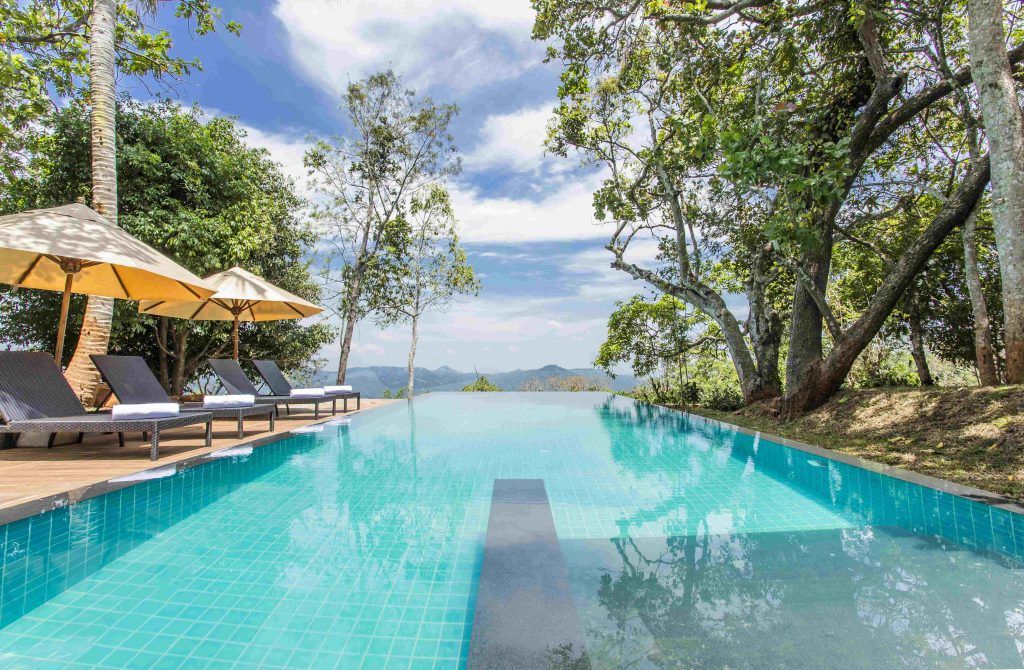
The pool at the property
The pool at the property | Courtesy of Mountbatten Bungalow

On my walk around the property with Ravindu Shamentha, my knowledgeable naturalist, I’m spoiled with sightings of a ruddy mongoose, the usually elusive striped-neck mongoose and palm squirrels with high-pitched, rhythmic chirps. Fruit trees—including mango and rose apple—draw hosts of butterflies and bird species, including endemics like Sri Lankan hanging parrot and the noisy yellow-fronted barbet. It comes as a surprise to see this concentration of wildlife so close to Kandy city.

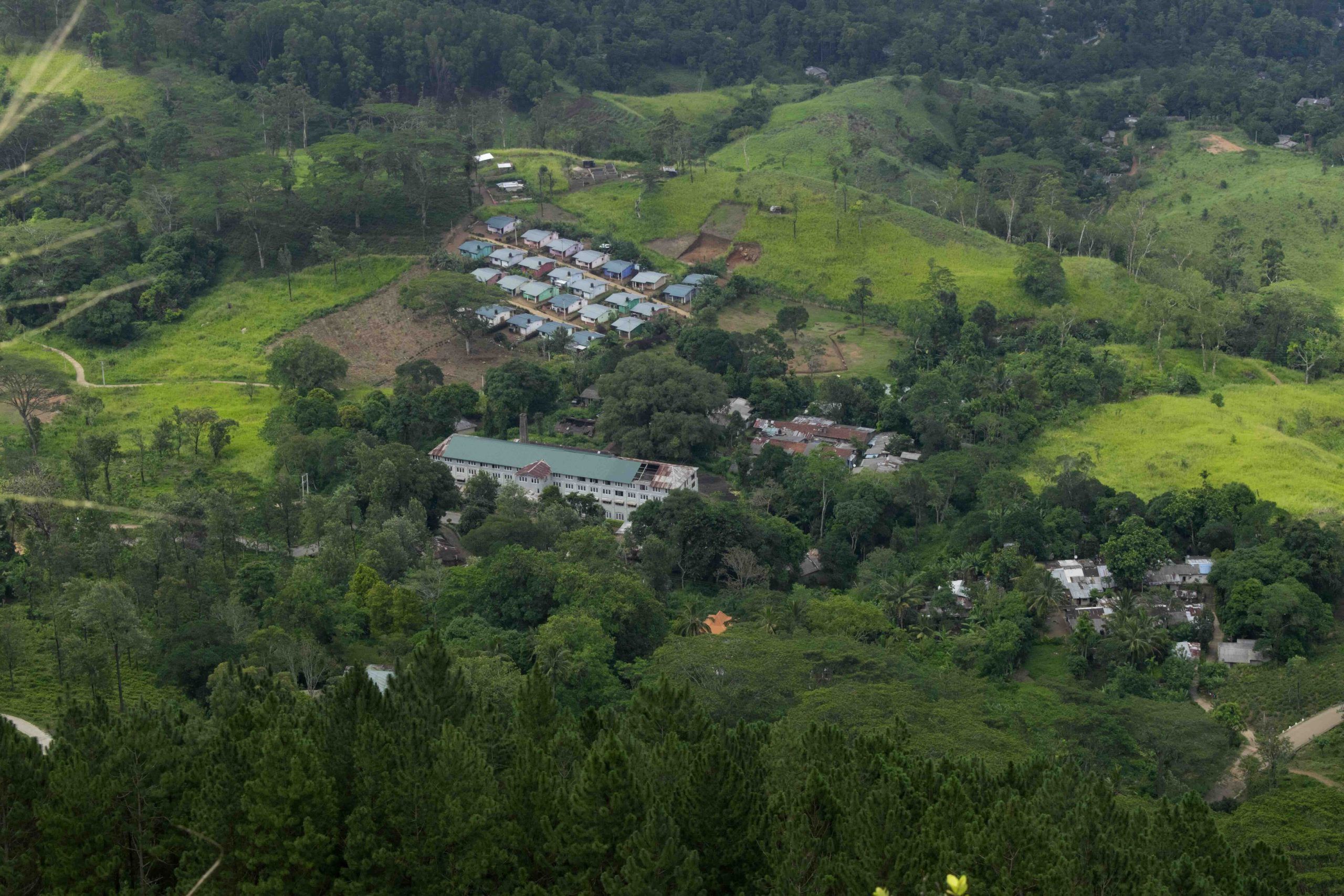
From Mountbatten Bungalow it’s a pleasant drive to the Pekoe Trail. Hiking from Haanthana to Galaha for 12.8 kilometers, we move through lush highland forests with splendid viewpoints, to a Tamil mountain village where a woman with a baby in her arms and a toddler by her side spontaneously invites me into her home.
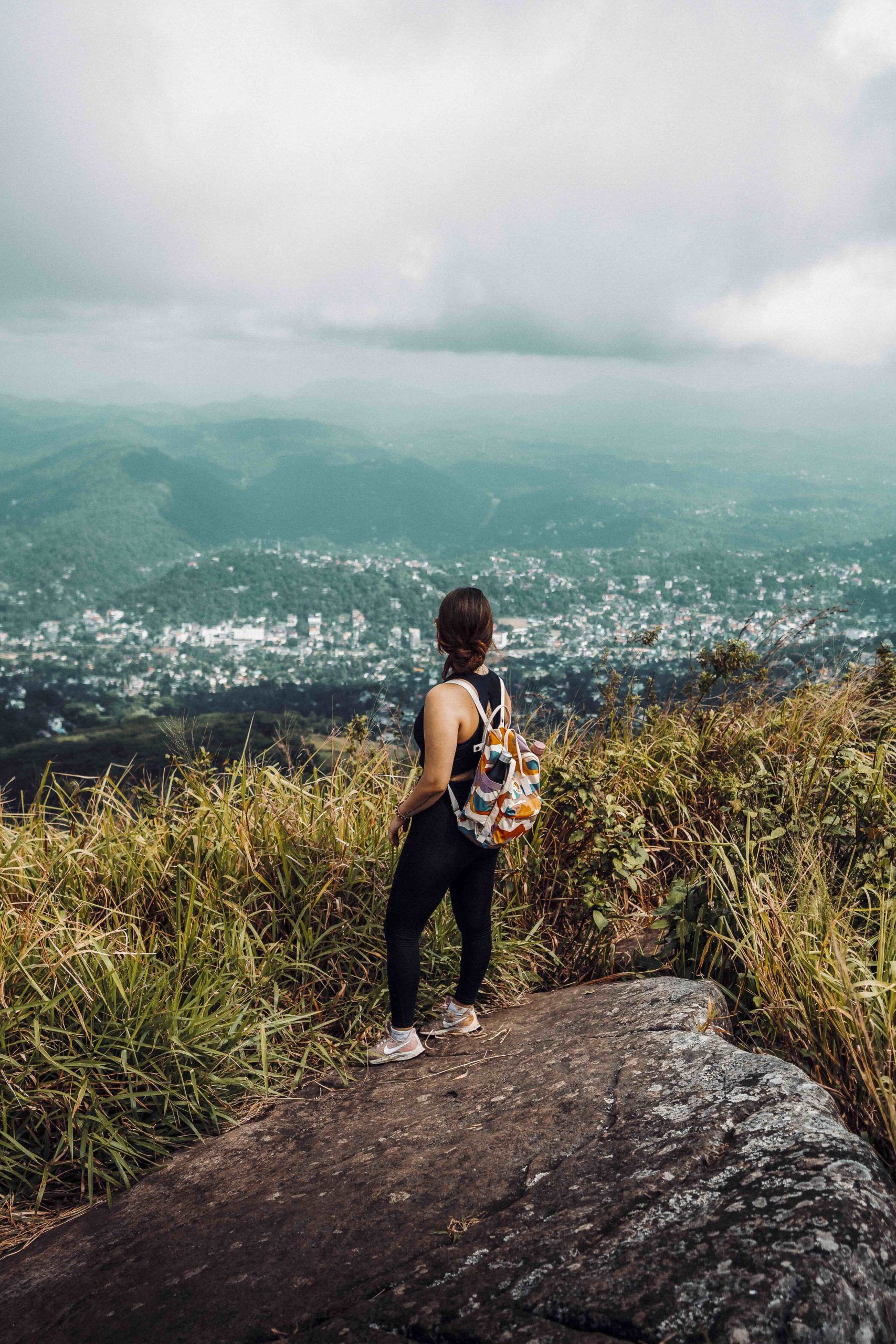
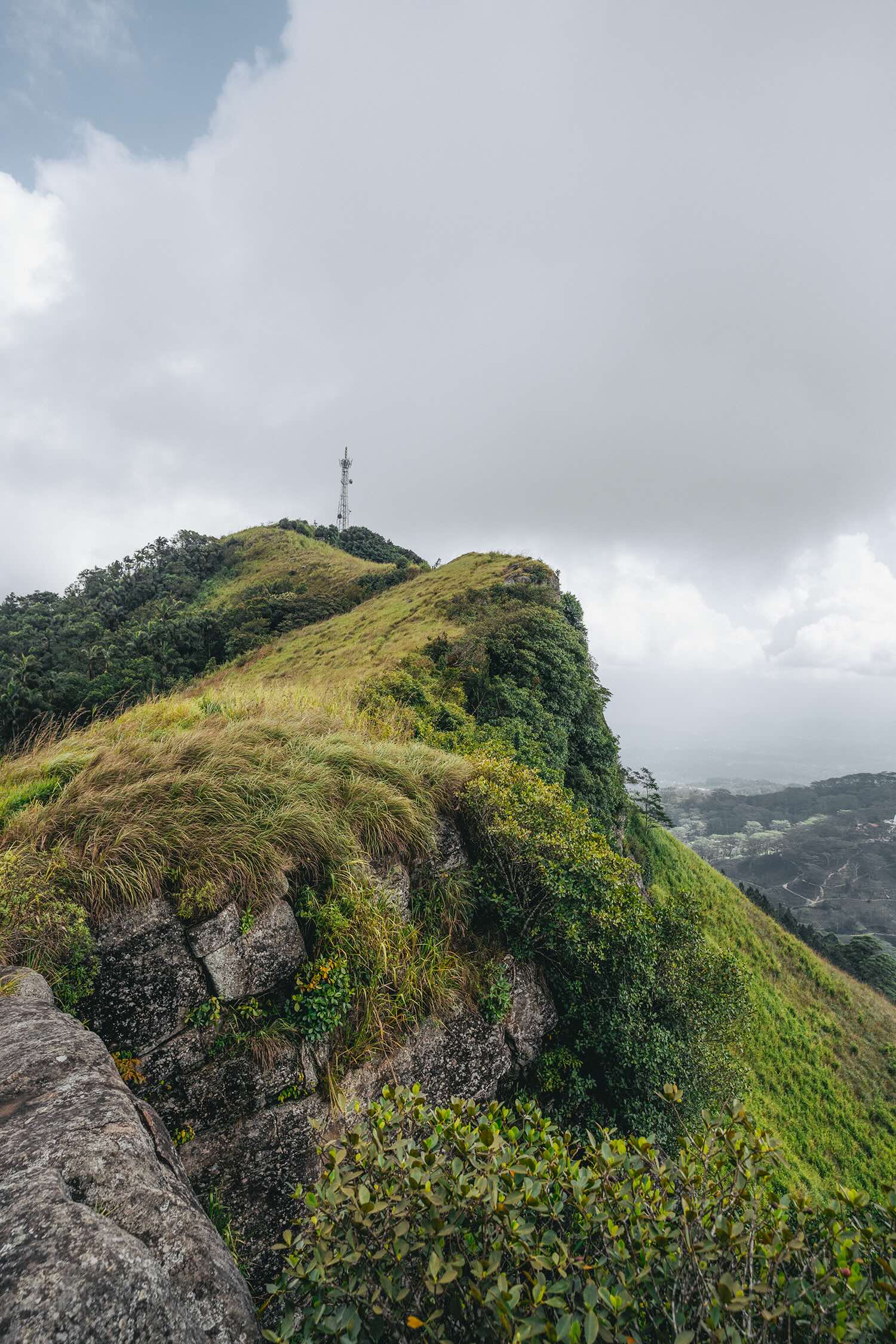
The trek to Hanthana

This plantation house is tiny, but neat, with a shrine to Lord Murugan, a Hindu god that is revered as the patron deity of the Tamil people. Murugan is also worshiped as the guardian of the gorgeous, mountainous landscape of the Hill Country, with its tea plantations. Ravindu, accompanying me on the hike, mentions that Tamil folklore holds a profound connection to Lord Murugan, believing that he walked these hills and married Valli, a local tribal princess. These colorfully clad Tamil women depend on their generational work as leaf pluckers on the tea plantations.

Scenes in the 1984 Indiana Jones movie were shot near to where we are hiking. We spot a male oriental garden lizard with a large red head, a black eagle catching a Layard’s parakeet and a purple-faced langur.
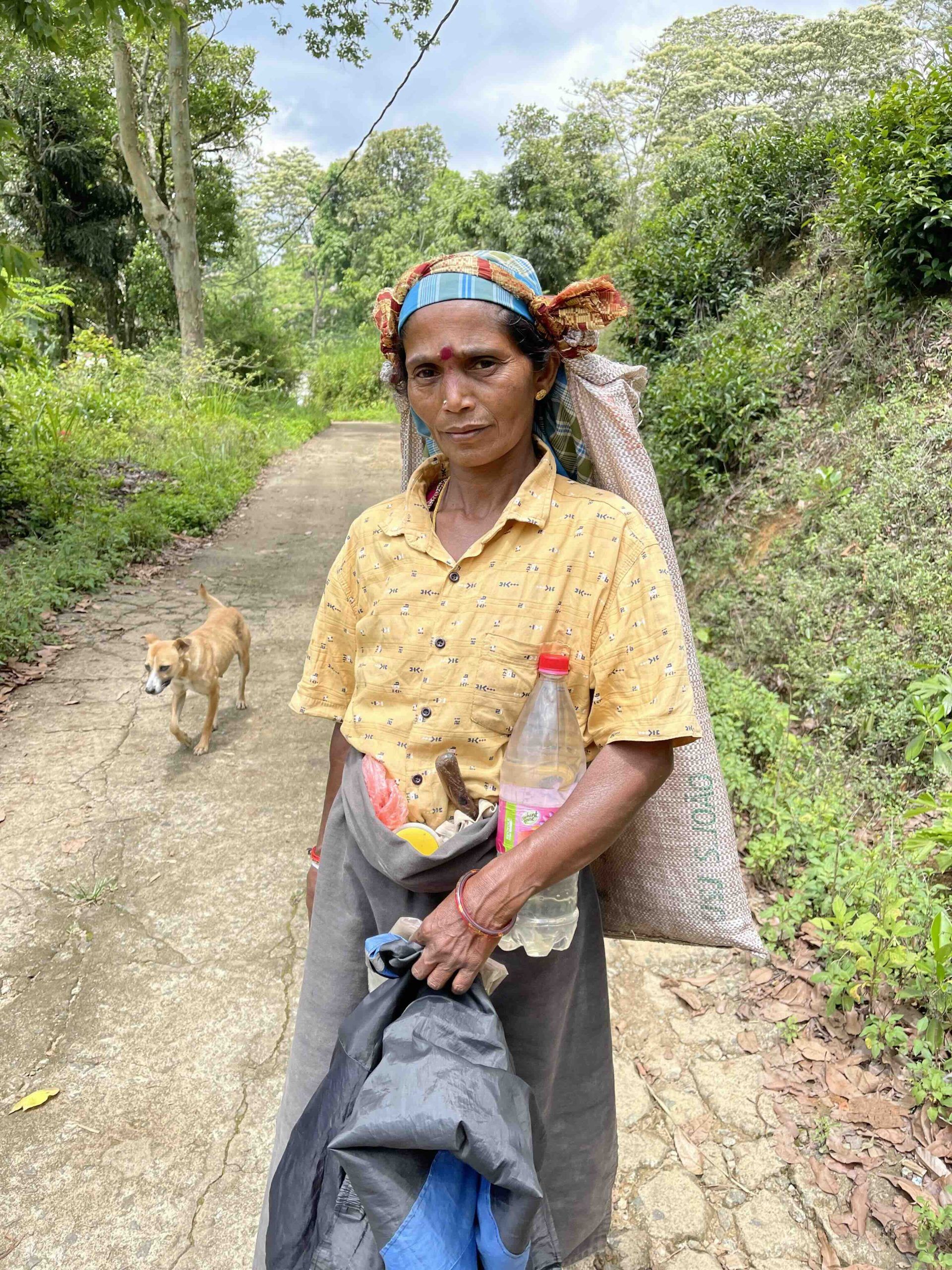
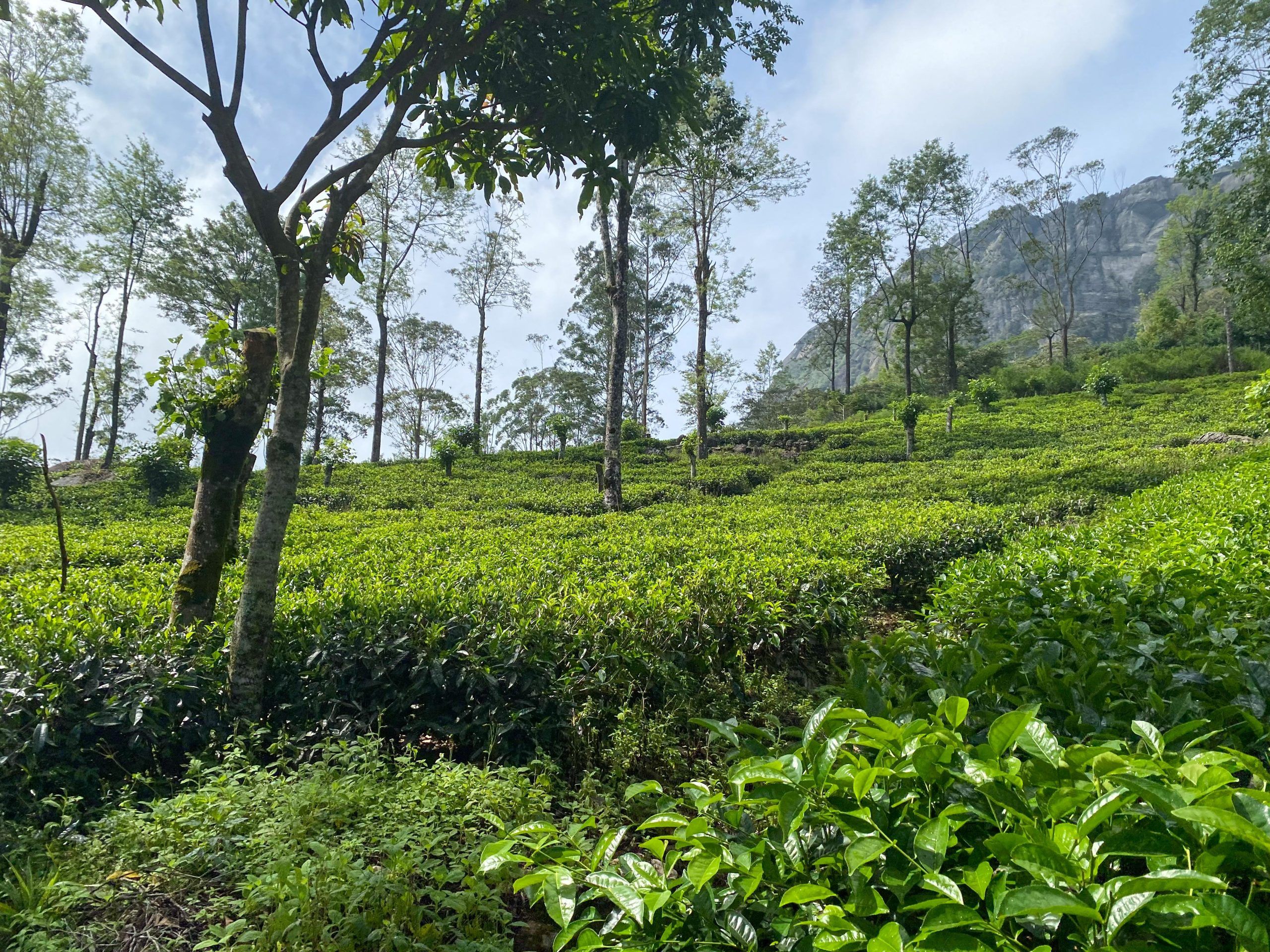
A local plantation worker
A local plantation worker | Gillian Mclaren
Trekking through tea fields

Returning to Mountbatten Bungalow, I’m served an array of delectable Sri Lankan curries, at a table on the trimmed lawn, under a full moon. Reflecting on my time in Sri Lanka as I sip Ceylon tea, what lingers longest isn’t the ancient scale of the temples with the intoxicating fragrance of crushed frangipani blossoms, the wildness of the hills or the diversity of wildlife; it is the disarming, effortless warmth and hospitality of the people here. It’s an unvarnished kindness and acceptance that has made me feel like I belong.

themacollection.com; doubles from USD 290 per night, including breakfast.

The author traveled with Connaissance de Ceylan.

Images courtesy of Connaissance de Ceylon unless otherwise credited.

Taken from: https://www.travelandleisureasia.com/sea/destinations/south-asia/for-a-real-taste-of-kandy-venture-off-the-tea-trails/ 

Sunday, June 21, 2026

Leopard Safaris • Yala National Park • Sri Lanka • Luxury Travel Magazine


Leopard Safaris, Sri Lanka: A Luxurious Blend of Nature, Comfort and Adventure

Leopard Safaris, Sri Lanka: A Luxurious Blend of Nature, Comfort and Adventure

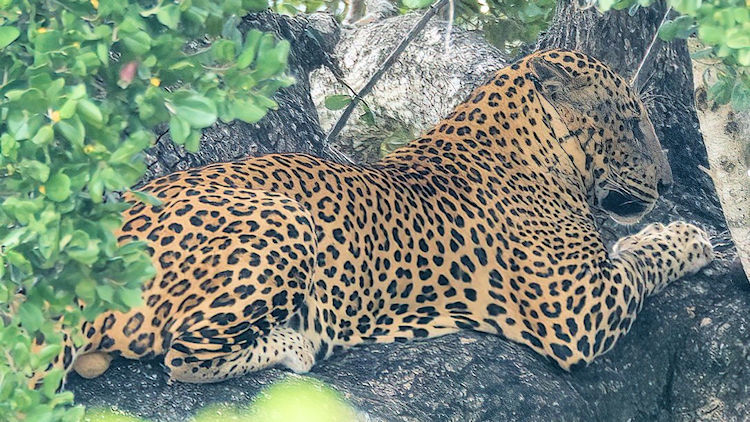
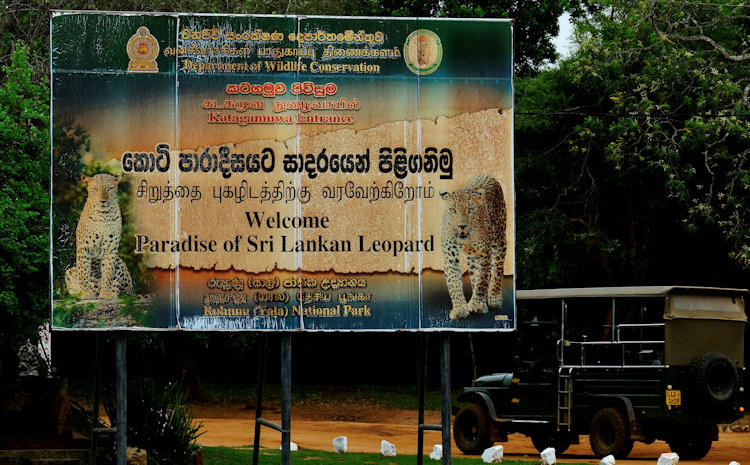
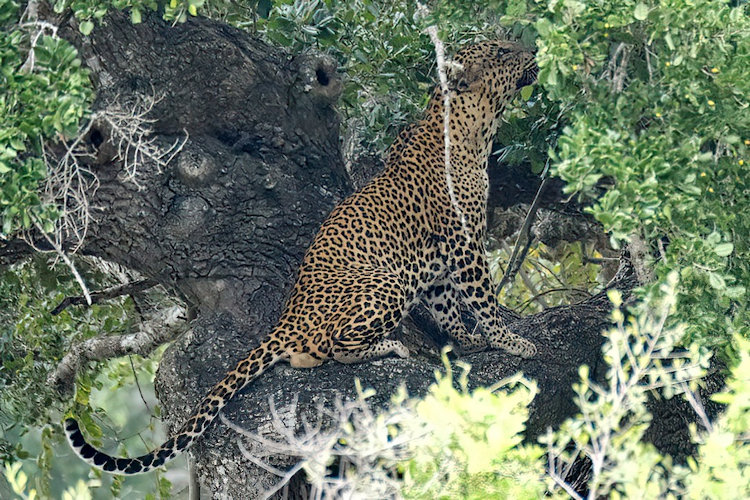
Yala National Park, in arid south-east Sri Lanka, covers 386 square miles, across five blocks. Bordering the Indian Ocean, the park comprises diverse ecosystems ranging from moist monsoon forests to freshwater and marine wetlands.This National Park has the highest density of leopards in the world, making sightings highly likely. The endangered native leopard subspecies, Panthera pardus kotiya, vies with the Persian leopard, Panthera pardus saxicolous, for the title of the largest leopard on planet earth. As leopards are the apex predator in Sri Lanka, in the absence of lions and tigers, they grow to massive sizes, with males weighing up to 200 pounds. With no competition or predator danger, leopards don’t have to carry their kills up into trees like they do in Africa, so these usually elusive big cats can be spotted on the roads.

Sri Lanka leopard safari

Image by Gillian McLaren

A leopard reputed to be the biggest in Yala National Park has not been seen for eight months, but during our game drive, we are informed by fellow safari enthusiasts that he has been found. Our driver is spurred on by Noel Rodrigo - founder and managing director of Leopard Safaris - to locate this reputedly beautiful cat. A row of jeeps alerts us to the special sighting, so we join an orderly queue of 5 vehicles. His size is astounding, with paws the size of a lion’s and a usually thick neck, plus his pelt has the gloss of a leopard in its prime, with perfect rosettes. I wonder whether he might be the most sizeable leopard in the world? Noel Rodrigo, known as The Leopard Man, who has offered luxury clamping in Yala since 2006, is richly informed about the leopards and declares that this is the most impressive male he has seen so far.

Sri Lanka leopard safari

Image by Gillian McLaren

Sri Lanka leopard safari

Image by Gillian McLaren

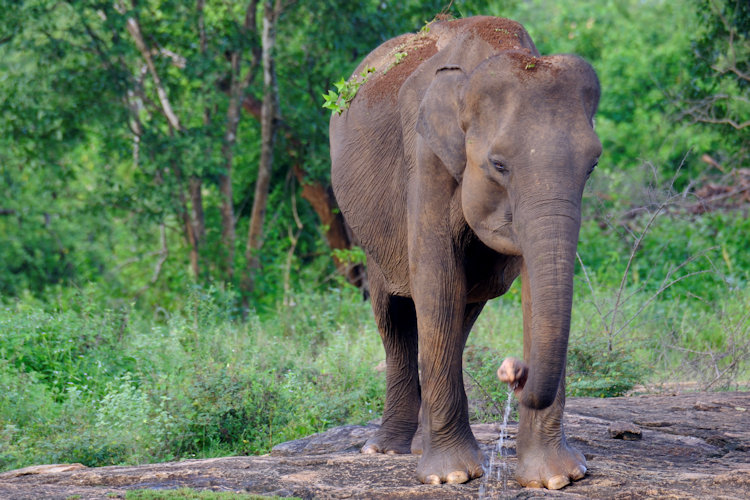
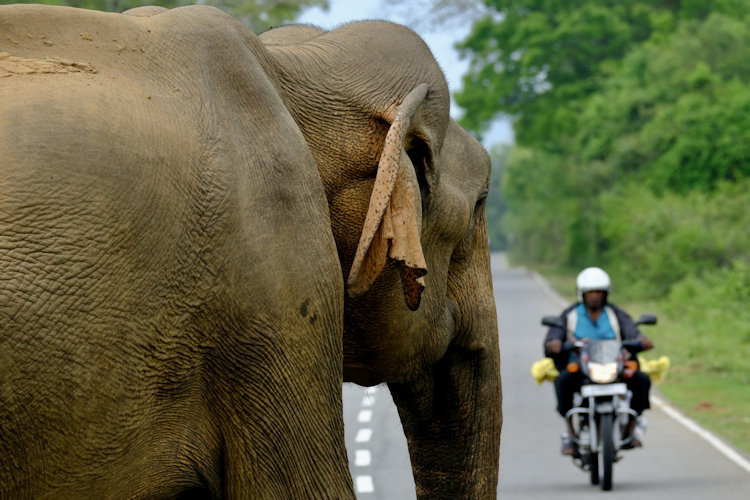
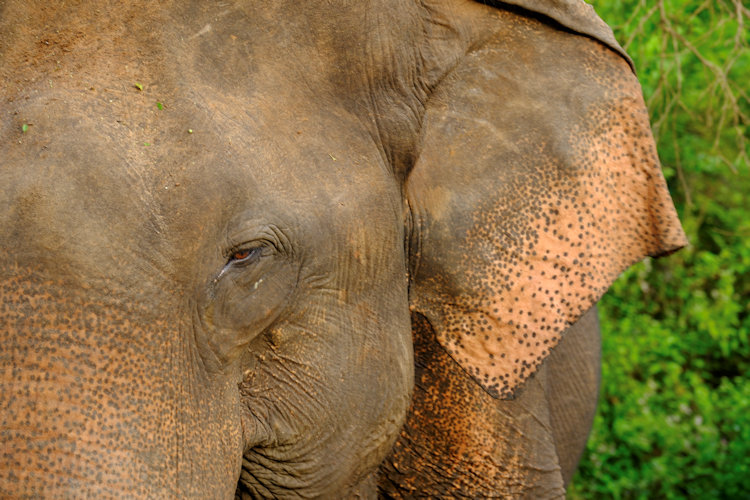
As Leopard safaris is sited on the border of Yala National Park, it is well positioned for their customised Toyota Land Cruisers to reach the entry gates in good time, to be at the front of any queue. I’m visiting out of season, when numbers of vehicles are lower. Morning safaris are time to enjoy the first light, with the golden glow for photographing mammals like the Sri Lankan elephant. This elephant subspecies, Elephas maximus maximus, is the largest Asian elephant and native to Sri Lanka, which has the highest density of elephants in Asia. Some elephants move outside the National Parks into surrounding jungle areas. When they stray onto the roads, these pachyderms are nonchalant about buses, lorries, cars, tuk-tuks and motorbikes. A female on the national road outside Yala, is well known.

Sri Lanka leopard safari

Image by Gillian McLaren

 Sri Lanka leopard safari

Image by Gillian McLaren

Sri Lankan elephants have distinct patches of depigmentation on their ears, face, trunk and belly. Sadly all female elephants are now tusk-less. There is great excitement when a “tusker” male is spotted, as only 6% of males grow tusks. The name does not refer to huge size of tusks, as it does in Africa, it simply indicates their presence. It’s a joyful experience to see a tusker in Yala and encouraging that there are some of these precious genes left in the population. Hunting in the past selected out most of the individuals with tusks and nearly caused the population to become extinct.

Sri Lanka leopard safari

Image by Gillian McLaren

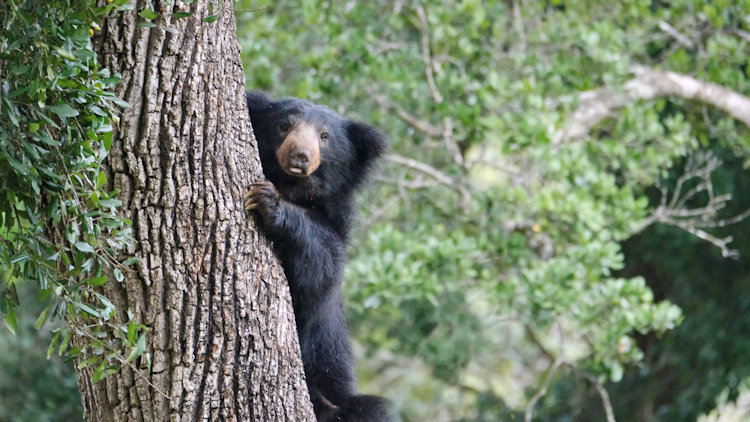
Another thrill in Yala is to find a Sri Lankan sloth bear, the subspecies Melursus ursinus inornatus that is highly endangered, with an estimated 1000 left in the country. Noel assures me that this bear was misnamed by the British, as it has inordinately long sickle-shaped claws, but they are actually busy, energetic and noisy. The appearance of their black fur is shaggy and disheveled. As the sloth bear is dependent on natural forests - for its diet of nuts, berries, carrion and insects from decaying stumps and trees - destruction of lowland forests continues to threaten their numbers. Humans have hunted them for food and products such as their bacula - penis bone - or their claws. Usually solitary and mostly nocturnal, they can be seen after rains, when they dig into the usually hard termite mounds to slurp up termites using their specially adapted lower lip and palate. We see one climbing an ironwood tree in search of food, right at the gate of Yala block 5. 

 Sri Lanka leopard safari - bear 

Image by Gillian McLaren


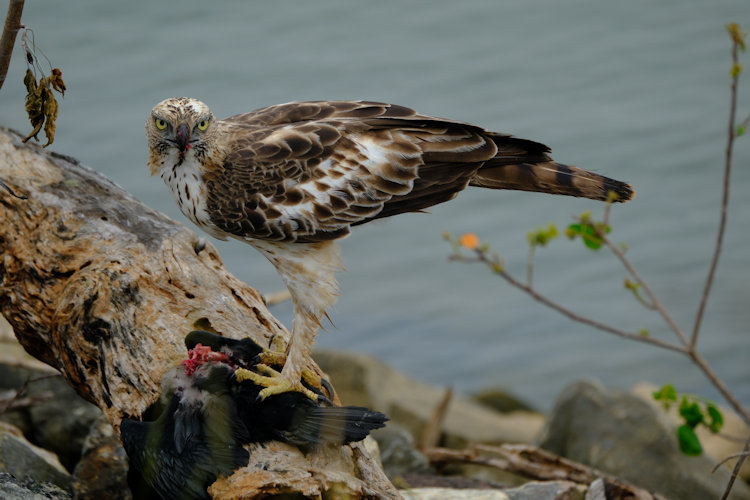
Noel and his naturalists at Leopard Safaris know the behaviour patterns and territories of many of the animal species, so are adept at tracking them for guests. The wild is unpredictable, of course, so each sighting is a privilege. There are constant surprises in Yala. We find two Golden jackals that have hunted a spotted deer and are feasting on the carcass, then a Changeable Hawk-eagle capturing and devouring a Great cormorant.

Sri Lanka leopard safari - bird 

Image by Gillian McLaren

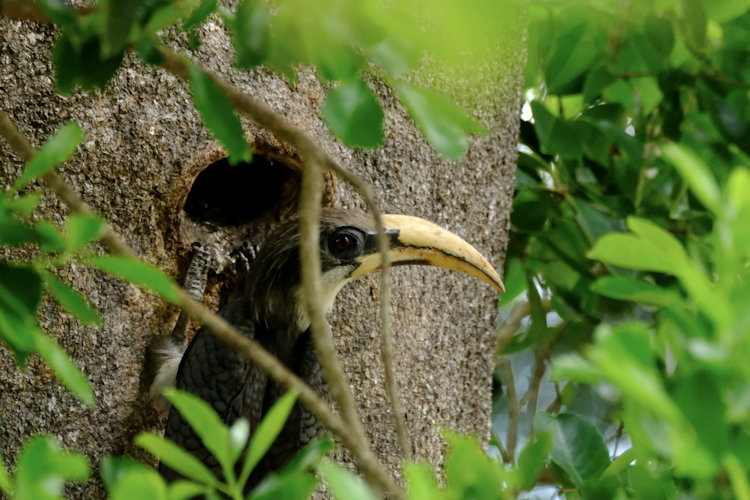
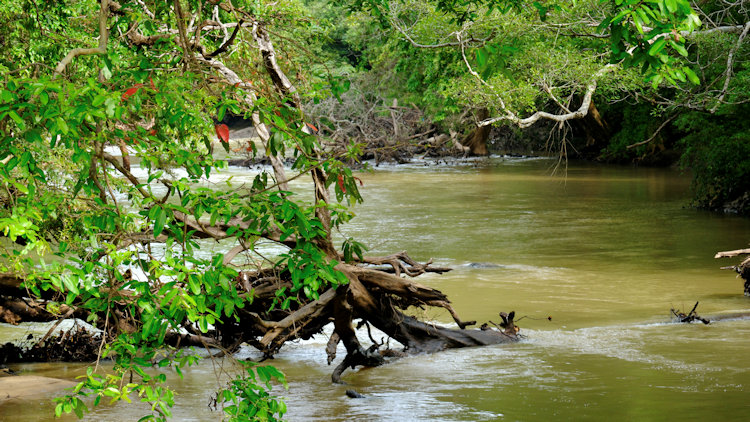
Next to a fast-flowing river, with mature trees for shade, we alight from the vehicle to stretch our legs, enjoy fine Sri Lankan tea with snacks and look for birds. Avian diversity includes 215 bird species, with six endemic to Sri Lanka. For birders who record their first time sightings, or “lifers”, Yala is a trove of “mega-ticks”. Sri Lankan jungle fowl - the national bird of Sri Lanka - is an endemic species that is easily seen. The male sports dramatic burnt-orange plumage, with a large red comb and glossy purple- black tail. A Sri Lanka grey hornbill is feeding its chicks with red berries, from outside their hole-in-the-tree nest. It has no casque, unlike the Malabar pied hornbill that has such an enormous casque I wonder how it can keep its balance. Despite the noisy, incessant call, of the endemic Crimson-fronted barbet, we battle to see the bird. 

Sri Lanka leopard safari - bird 

Image by Gillian McLaren

 Sri Lanka leopard safari

 Image by Gillian McLaren

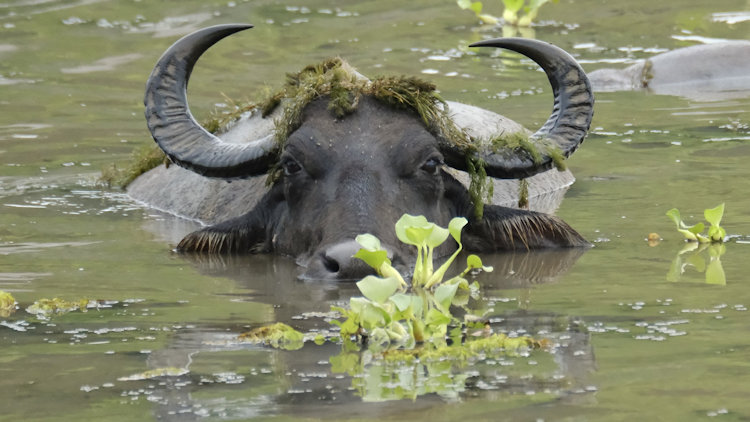
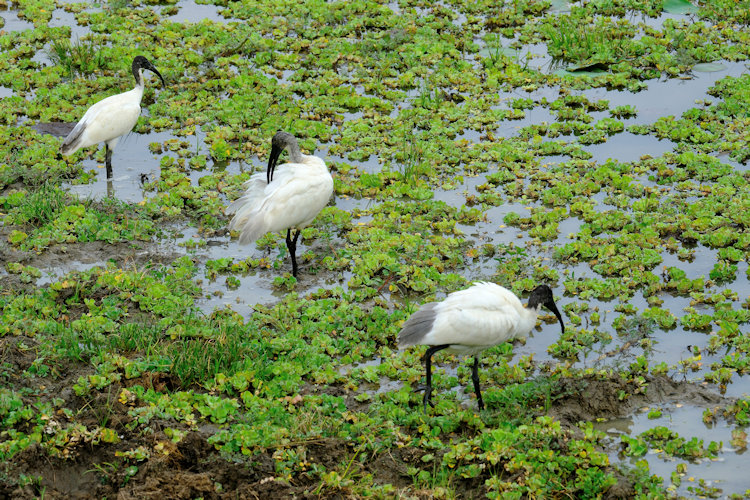
Its easy to spend hours at waterholes, tanks and rock pools, or at the reservoir in Yala 1, to gaze at the array of waterbirds and the gregarious Wild water buffalo as they cavort in the water. It seems as if they enjoy themselves as they dive down, submerge and resurface, often with egrets or herons riding on their backs, to feed on parasites and to catch easily insects. These Wild water buffalo have wide, splayed hooves, so they can move easily in mud without sinking. They look similar to the domesticated water buffalo that provide delicious curd, one of the delectable desserts at Leopard safaris, served with Jaggery - sugar made from palm sap.

Sri Lanka leopard safari - water buffalo 

Image by Gillian McLaren

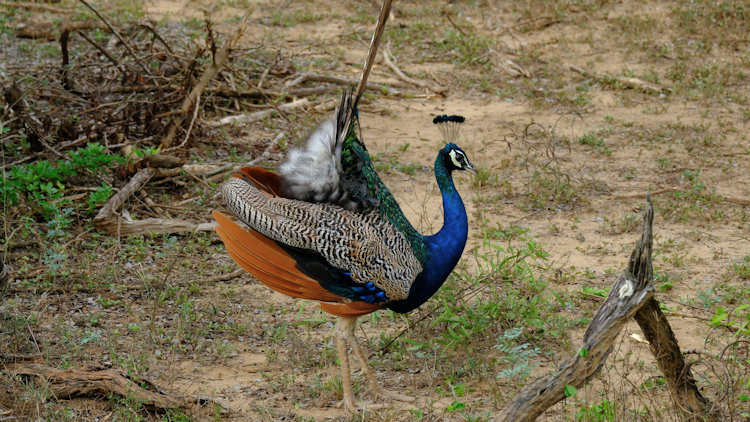
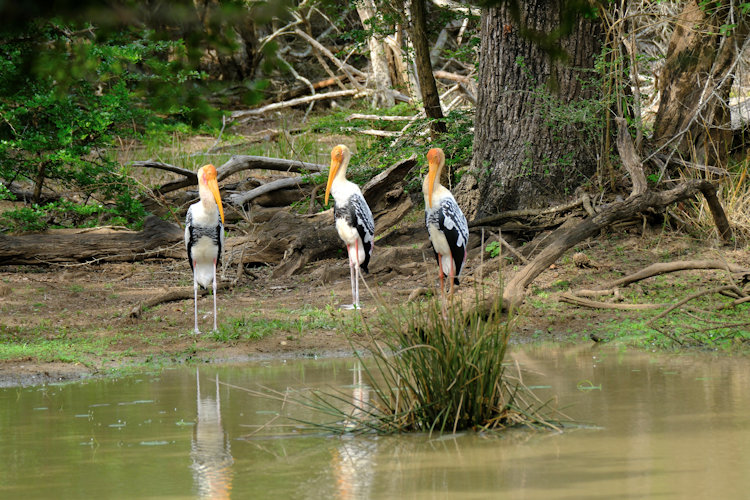
We stop at each waterhole to look for Painted storks, Wooly-necked storks, and perhaps a rare Lesser Adjutant stork. Wild peafowls are common and entertain us as the peacocks spread their panoply of tail feathers and engage in an elaborate dance to impress the peahens. At this time of the year they are losing their splendid plumage. We are amused to watch a peacock with literally one feather left, that is still trying his luck with the peahens in a meagre display. Females raise their colourless tail feathers in defense when they feel threatened by another bird species.

Sri Lanka leopard safari 

Image by Gillian McLaren

birds
 

Image by Gillian McLaren

 birds 

Image by Gillian McLaren


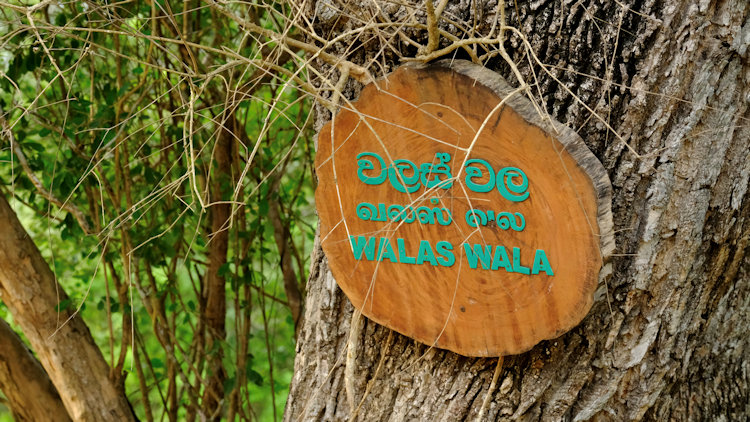
Noel was responsible for constructing one of the waterholes, Walas Wala - Little Bear - which helps animals survive during the dry months. In addition, he has supported the anti-poaching units and donated six toilets for guest use.

 Sri Lanka leopard safari

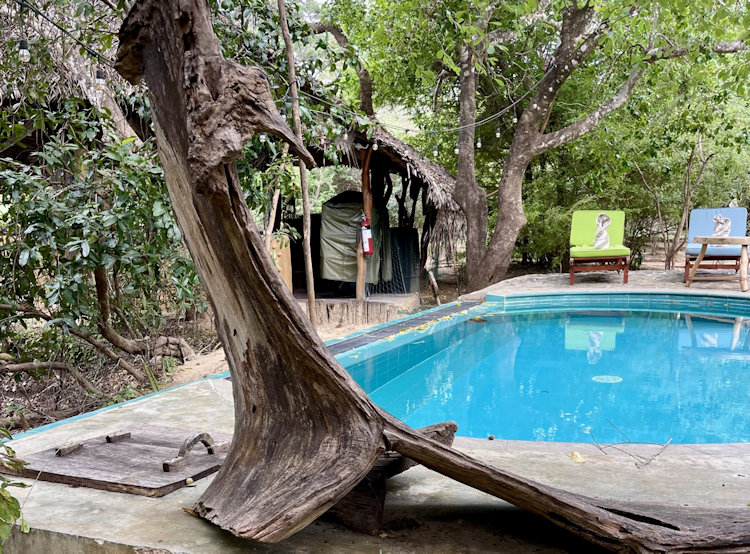
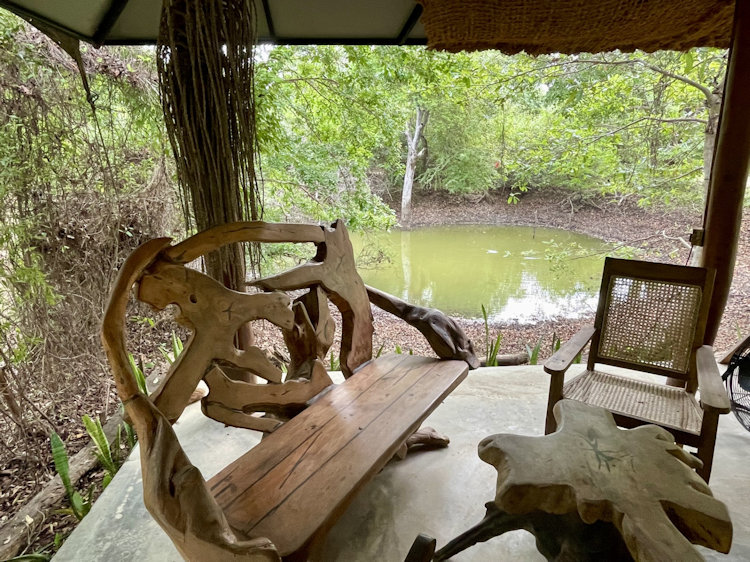
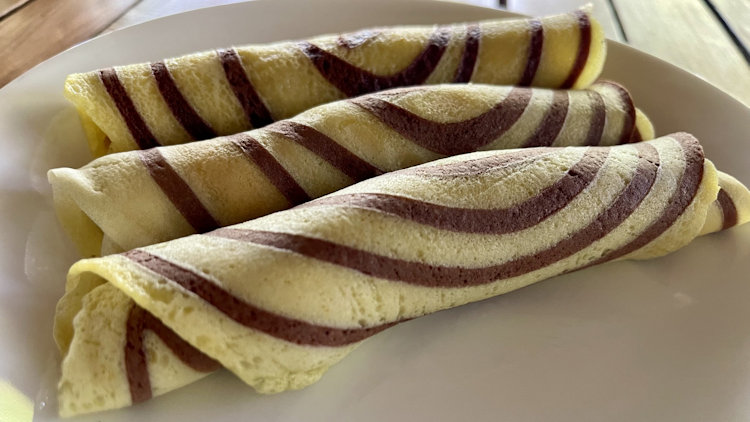
Back at Leopard Safaris camp, a salt-water swimming pool brings relief from the heat, before lunch is served in a shady spot. Each meal is presented at a table set in a different part of the jungle-like surroundings, or in front of the waterhole under a cover of woven palm leaves. From Sri Lankan breakfast of hoppers, to dinner with an array of traditional Sri Lankan curries, the food is consistently excellent.

 Sri Lanka leopard safari 

Image by Gillian McLaren

Sri Lanka leopard safari
 

Image by Gillian McLaren

 Sri Lanka leopard safariImage by Gillian McLaren

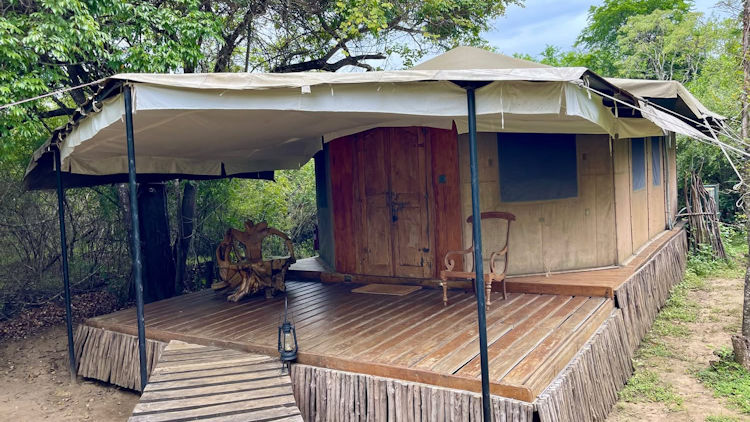
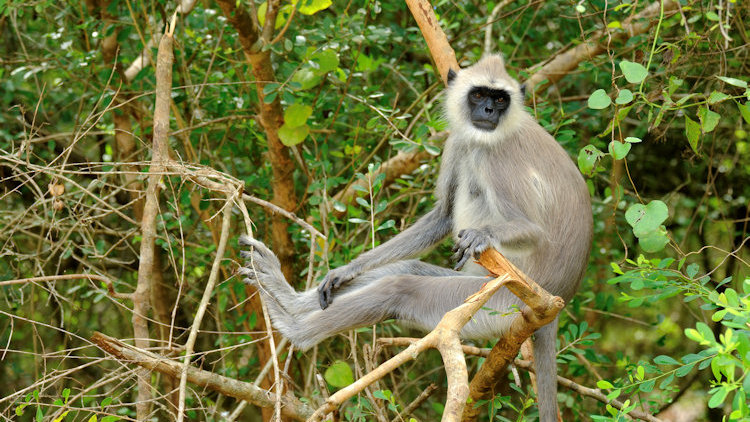
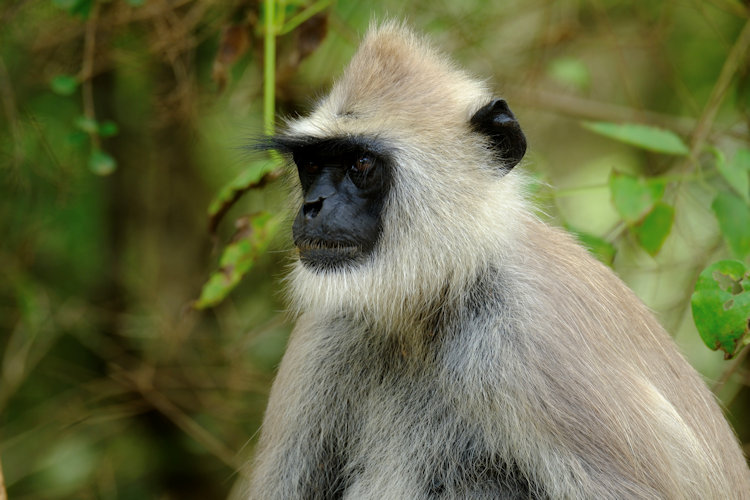
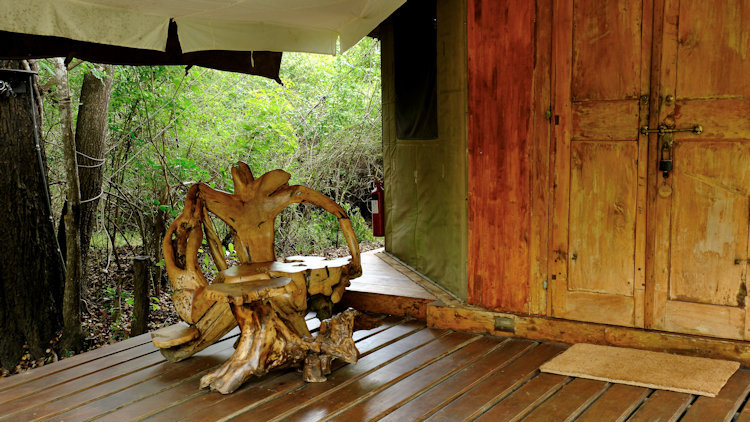
The immersion in nature does not stop in Yala. In the precincts of Leopard Safaris camp Grey langurs play in the trees and clouds of butterflies sup from the wildflowers. As I sit on the wooden chair outside my air-conditioned tent, a juvenile land monitor idles past with characteristic sigmoid movement and a pair of Paradise flycatchers take turns on their nest.


Sri Lanka leopard safari - monkey 

Image by Gillian McLaren

 Sri Lanka leopard safari - monkey 

Image by Gillian McLaren

Sri Lanka leopard safari 

Image by Gillian McLaren

 Sri Lanka leopard safari 

Image by Gillian McLaren

In a meaningful ceremony on my last afternoon, I am invited to plant a Terminali arjuna sapling and to water it. Time at Leopard Safaris is enriching, entertaining and educational.

https://leopardsafaris.com/

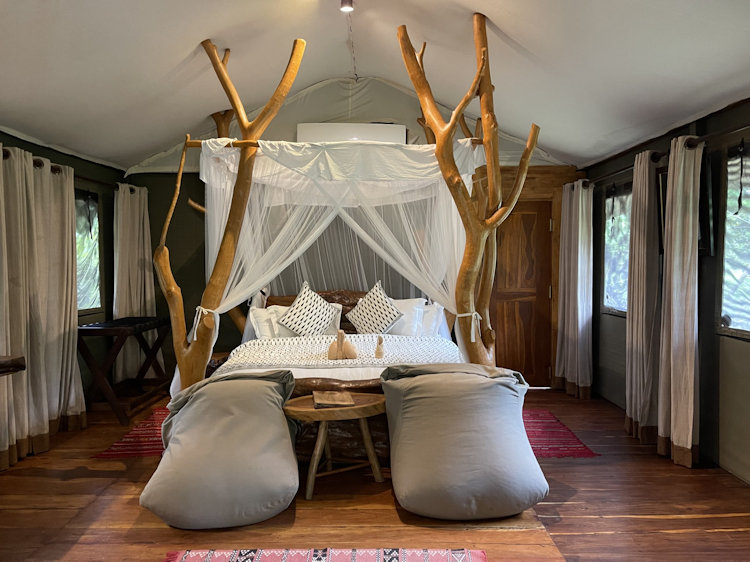
Highly Recommended Accommodation in Colombo

Lake Lodge, a Nyne Hotel, is a 10-room artistically decorated boutique hotel, located in a tranquil garden, in an upscale hub in Colombo centre, near to Beira Lake. For fine dining, enjoy a Sri Lankan or International meal in the airy Table by Nyne. Take a stroll, to spot Sri Lankan flying fox roosting in the trees, land monitor, plus bird species including endemics like White-bellied sea-eagle, Crimson-fronted barbet, or Sri Lanka swallow.

 Sri Lanka leopard safari 

Image by Gillian McLaren

 Sri Lanka leopard safari 

Image by Gillian McLaren

 https://nynehotels.com/lake-lodge/

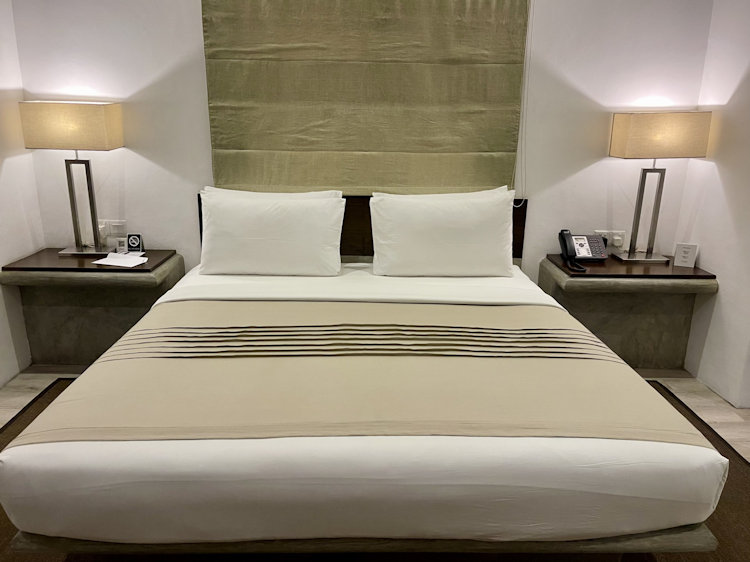
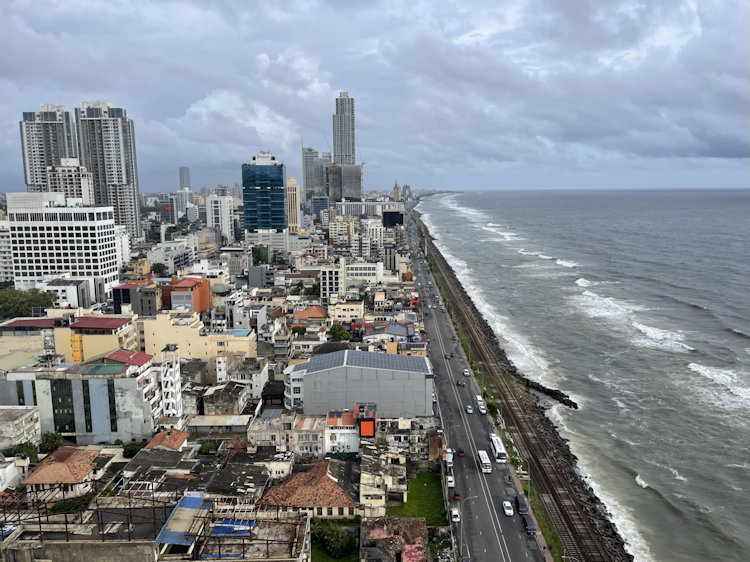
Granbell Hotel on Marine drive in the Business centre, has 292 scrupulously clean rooms, each with spectacular ocean views or cityscapes. Decor and design blend Japanese minimalism with Sri Lankan elements. Dining options include in-room, Minori Japanese and All Day Dining Restaurant, plus Café EN. Watch a sunset from the roof top infinity pool, or Bar on the Top. Perfect for an overnight stay before flying, or for a business trip, Granbell service is efficient and reliable.

Sri Lanka leopard safari 

Image by Gillian McLaren

 Sri Lanka leopard safari 

Image by Gillian McLaren

 https://granbellhotel.lk/

Tuesday, March 3, 2026

Constance Lemuria • Praslin Island • Seychelles • WANTED

Constance Lemuria: Seychelles’ most immersive escape

 
Three beaches, endemic palms and turtle nesting grounds define this Indian Ocean retreat


Constance Lemuria is located on the northwestern edge of Praslin Island. (Constance Hotels)

Praslin Island possesses an unhurried cadence that distinguishes it from the rest of the Seychelles. It is a tropical island of granite and shadow, where the air is thick with the scent of damp earth and salt. At the northwestern edge of this landscape, in 101ha, sits Constance Lemuria, a resort that feels less like a hotel and more like a carefully managed extension of the island’s own wild interior.

With a deliberate sense of theatre, the heavy timber doors of the main lodge are opened, revealing a communal area that serves as an open-air balcony. From this high point, the eye is led down a series of tiered stone pools towards the shifting blues of the Indian Ocean, framed by a dense canopy of indigenous trees.

Constance Lemuria has three distinct beaches — Anse Kerlan, Petite Anse Kerlan and the secluded Anse Georgette (arguably the most beautiful beach in the Seychelles). It’s reachable via a winding path through the hills or by boat. The crescent of white sand is flanked by the huge, pink-hued granite boulders that are the archipelago’s geological signature.


 The beaches are characterised by white sand and pink-hued granite boulders. (Constance Hotels)

 This is a landscape of endemics, most notably the rare Coco de Mer palm, with its enormous fan-shaped fronds and heavy, prehistoric seeds. When the legendary British general, Charles Gordon, visited Praslin in the 1880s, he was convinced that he had discovered the original Garden of Eden, identifying the Coco de Mer palm as the Tree of Knowledge. Local officials were amused by his theory. Certainly Praslin’s beauty, fertility and boulder-strewn landscape feel primordial.

There is a sense that you have stepped onto a fragment of a lost continent, where nature isn’t just a backdrop but the soul of the experience.

This botanical density provides a vital corridor for the island’s birdlife. The iridescent Seychelles sunbird flits between the hibiscus blooms and the Seychelles bulbul occupies the upper reaches of the takamaka. Near the shoreline, the elegant white terns — locally known as fairy terns — nest in the branches of the salt-hardy casuarinas. The Indian almond trees provide additional shade near the shoreline, their broad leaves turning vibrant red before they fall.


 A dedicated warden monitors the beach for turtle nesting activity. (Constance Hotels)

 The sands of Anse Kerlan are a primary nesting ground for the endangered hawksbill and green turtles, which return to these specific shores to lay their eggs between October and February. Constance Lemuria’s conservation strategy is one of minimal interference and maximum protection, where Robert Matombe, a dedicated warden, monitors the shoreline for flipper tracks that signal a new nest.

The process of nesting and subsequent hatching unfolds under a strict protocol of darkness and silence. By restricting artificial light near the water’s edge, the resort ensures that hatchlings are guided by the natural luminosity of the ocean rather than the glow of the lodge. It’s a quiet, pragmatic protection of a cycle that predates the resort by millennia. Joseph Mocke, sustainability manager, liaises with local students and guests on conservation initiatives.

The underwater geography of the region is an extension of the granitic formations seen on land. Diving from the on-site UDive Centre allows access to sites such as Ave Maria, located in the channel between Praslin and La Digue. Gargantuan granite boulders rise from the seabed like a submerged Stonehenge.


Marine species include grey reef sharks, eagle rays, hawksbill turtles and schooling snappers (Constance Hotels)

 Descending through the blue, I am greeted by a shimmering curtain of yellowback fusiliers. Beneath a ledge, a hawksbill turtle — ancient and unbothered — nibbles on sea sponges, while a pair of whitetip reef sharks patrol the perimeter with effortless grace. The topography here is dramatic, characterised by swim-throughs and canyons draped in soft corals.

To witness the intricate colours of a nudibranch is a reminder of the biological riches these islands protect. In these 28°C waters, visibility extends beyond 25m, revealing a population of grey reef sharks, eagle rays and schooling snappers that move through the crevices. It is a rugged, vertical world that provides a stark contrast to the lagoons near other islands or around atolls.

The accommodation at Constance Lemuria blends with the landscape. Positioned along the shoreline of Anse Kerlan and Petite Anse Kelan, the suites and villas are constructed from a palette of pink granite, white marble and warm timber. The layout ensures that every room is orientated towards the ocean, with the junior and senior suites tucked into the vegetation just steps from the high-tide mark.


 Suites and villas are positioned along Anse Kerlan and Petite Anse Kerlan. (Constance Hotels)


 All rooms are orientated towards the ocean. (Constance Hotels)

 Inside, the aesthetic is one of understated, organic luxury, with open-plan spaces that rely on natural ventilation and a seamless transition between the interior and the salt-heavy breeze of the coast. For those requiring more seclusion, the villas are built around existing granite outcrops, screened by thickets of takamaka and pandanus. The Presidential Villa at the southern end of the beach has a private stretch of sand.

Each dining venue at Constance Lemuria has been carefully placed to offer the best perspectives of the terrain. The Nest is built onto a rocky peninsula between the beaches, offering a vantage point for observing the paradise flycatcher while dining on Creole-style seafood like jobfish and red snapper.

 Diva provides a more formal atmosphere for fine dining. (Constance Hotels)

 Legend, the central hub, is an open-air pavilion relying on natural ventilation, where lavish buffets are presented for breakfast and themed dinners. Diva, situated near the hills of the 18-hole championship golf course, provides a more formal atmosphere for fine dining, plus an extensive wine cellar that houses a curated global selection.

The interior features a contemporary design with a focus on light and space. The menu at Diva emphasises modern Mediterranean techniques and bistronomy, offering a structured dining experience that contrasts with the more casual, open-air venues on the property. In each restaurant, service is efficient and professional, reflecting the resort’s status as a member of the Leading Hotels of the World.


 Each restaurant reflects the resort’s status as a member of the Leading Hotels of the World. (Constance Hotels)

 The golf course winds through a valley of raffia palms and pandanus before ascending to the 15th hole, which offers a panorama down onto the wild, unmanicured sands of Anse Georgette. This balance between structured luxury and unyielding nature defines the property as a managed environment where the infrastructure of the resort is secondary to the preservation of the granite cliffs, endemic trees and wildlife.

Constance Lemuria is a prime destination for observation of the natural world within a sophisticated environment. The presence of the coco de mer, the return of the hawksbill turtles and the nesting of the fairy terns all serve as reminders that the resort is a guest within an ancient story. Time here is not measured by a clock, but by the movement of the tide against the granite and the seasonal return of the life that has called this island home for millennia.

 
Taken from: https://www.wantedonline.co.za/travel/2026-02-24-constance-lemuria-seychelles-most-immersive-escape/


Gillian Mclaren Travel and Science Writer

Followers