Monday, April 20, 2026

Sindile • Shamwari Private Game Reserve • Eastern Cape • South Africa • Luxury Travel Magazine


Shamwari Private Game Reserve: Dramatic landscape, spectacular viewpoints, a diversity of game and plant species

 Shamwari Private Game Reserve: Dramatic landscape, spectacular viewpoints, a diversity of game and plant species 

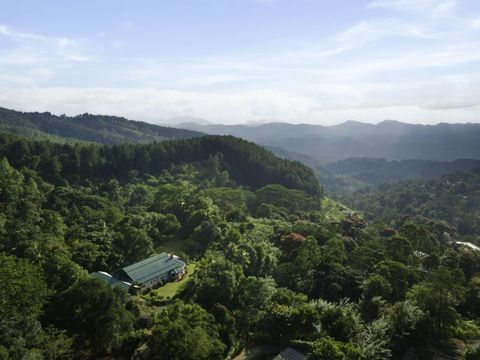
Set in the Eastern Cape of South Africa, Shamwari Private Game Reserve has sublime scenery as a backdrop to each game sighting. The Bushman’s River flows through the Reserve, providing a riparian zone for waterbirds, hippos and a profusion of plant species. With five separate biomes, the panoramic ecosystem - ever-changing on a game drive or bush walk - displays a variety of trees, bushes, succulents and grasslands where an abundance of flowers peep through, adding splashes of colour. The Brunsvigia bosmaniae burst out of their bulbs into flower in Autumn, in a spectacular display. When the umbel of flowers dries out, it efficiently spreads its seed in the wind like a tumbleweed. Shamwari flowers

Shamwari

Shamwari ducks 

A Black rhino - a critically endangered species - looks out at us, partially hidden by Rhenosterbos - a grey leaved evergreen shrub. A dominant male, his horns have been cut off, as he was too aggressive with other male Back rhinos, injuring some of them.Shamwari

Shamwari sunset 

Heavily protected from poachers, most of the reserve’s White and Black rhinos have not had their horns cut off, so are an impressive sighting, unusual in South Africa nowadays. Spotting them on open plain areas, allows for a detailed view of the underside of their feet. My ranger Samantha Snodgrass - a tracking expert - shows me signs of a mother and calf White rhino that recently lay down on our sand road, before they walked off into the bush. We also hop off the vehicle to look at Water mongoose tracks indented in dried mud.Shamwari rhino

Shamwari rhino 

At a rhino midden, Samantha teaches me that Black rhino has lighter coloured dung, with twigs and short sticks bitten off at a 45* angle by slanted molars, as they browse on shrubbery. White rhino has dark coloured dung with bits of grass, as it is a grazer. The middens have furrows made by the rhino’s back feet, so he can distribute his scent, to proclaim his dominance in a territory, to provide details of his age, sex, general health, and reproductive status. With Samantha, I’m becoming an expert in scatology!

 Shamwari jeep 

An old male lion, 15 years old, has lost two females from his pride to a handsome nomadic male. One female has remained with him as she has four cubs, but she is likely to defect to the interloper’s new pride when the young become independent. We find the old male on a rise, gazing across a valley and calling out valiantly for his remaining female and his cubs. Leaving him, we locate the cubs near to a waterhole, gnawing on bones from a buffalo calf carcass.Shamwari lion

Shamwari lion roar 

At sunset, an elephant bull - irritable as he is in musth, when his testosterone rages - chases the lone nomadic male lion. In the open game vehicle we are able to closely approach sightings, to get to know animal behaviour, not just to identify them.Shamwari elephant feet 

An African Buffalo herd that roams this wilderness is resting in short grass, as they chew the cud. Despite standing at up to 1,7 m tall, these bovids almost appear small under the immense skies of Shamwari Private Game Reserve. As they like to roll around in the mud to get rid of ticks and parasites that latch onto their skin, some have mud on their legs and flanks. Small birds such as Red-billed oxpecker hop around on them feeding on the parasites insects. Quite different from the typical savannah of game parks in other areas of Southern Africa - that have abundant thorn trees and tawny brown grasses - Shamwari has lush rolling hills, dense and impenetrable

 Shamwari wildebeest

Shamwari thicket 

Albany Thicket with evergreen shrub-land, dominated by spiny succulent trees, shrubs and vines.

Occasional tracks in the hills show the presence of African leopard, but they are stealthy and secretive, so seldom seen. By way of compensation, we do spot several Leopard tortoises, which have have claws on their feet.

Shamwari tortoise 

On this safari, it is difficult to believe that Shamwari Private Game Reserve was once denuded and degraded farmland, where game was hunted and poached out and land deployed for agricultural crops or domestic animal husbandry. “The Shamwari project began in 1992, when a dedicated conservation team started buying up land, taking down fences and reintroducing indigenous animals.” Now, as well as the Big Five, mammals include cheetah, brown hyena and serval; lesser known aardvark and aardwolf; plus rare species like Parrot-beaked tortoise, Albany puff adder and a flightless dung beetle. It’s a notable rewilding success story and an ongoing project. Ecologists are planning to release a pack wild dogs onto this conservation area, in 2027.

Shamwari leopard

Shamwari leopard baby 

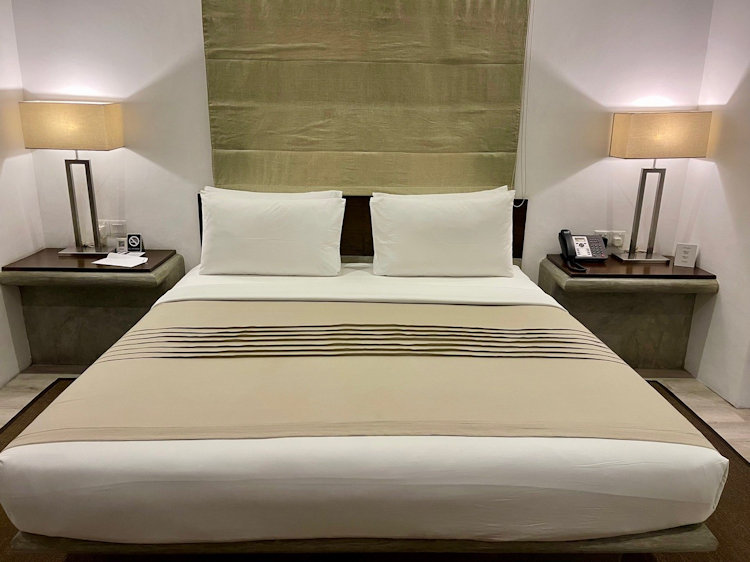
One of six lodges and an adventurous Explorer Camp found in the reserve, Sindile comprises nine freestanding tents, each with its own heated plunge pool, looking out over the Bushman’s River and beyond to the hills. My elevated tent faces a permanent waterhole that teems with game throughout the day. The tent interior is sophisticated, in natural tones, with decor made from locally sourced rattan, beadwork and wood. Amenities include pleasantly fragranced bath salts and bath oil.

Shamwari bedroom 

Ensconced on the deck of my luxurious tent, I choose Beaumont Chenin Blanc 2024, a highly rated cool climate South African wine that is unwooded, with a tropical aroma, slightly citrusy. With fruity palate and pleasing balance, this chilled wine pairs well with my preferred light lunch of deconstructed green salad, baguette straight from the oven and Portuguese style prawns, served by my personal butler. I select homemade mint chocolate ice-cream from the dessert menu, which I savour while standing in my private rim pool, as I watch Vervet monkeys playing and scampering. There is no shortage of treats in my tent, with surprises including cookies, home-made salted crisps, chocolate coated almonds and Rooibos fudge.

Shamwari wine

Shamwari fudge 

The communal area at Sindile comprises three separate tents, joined by a wooden deck with sensational views. An indoor dining room sports a harvest table laden with food and wine selections. The reception space is a congenial spot with couches, plus a clothing and souvenir boutique. An intimate lounge and bar area is the meeting point for activities, where glass jars of sweets like Wedgewood nougat are permanently filled and pre-drive snacks are available. In front of the lounge are recliners and down a few steps is a fire pit and deck chairs. There are plenty nooks for chilling on one’s own, or to chat to fellow guests.

For turndown at night, I ask my housekeeper to leave the mosquito nets tied up - as Shamwari is malaria free - plus to leave my curtains remain open at night, for me to muse on the stars and waxing moon. Fiery-necked nightjars call persistently, the resident bushbuck barks a warning call and Black-backed jackals howl and wail.

Shamwari moon 

https://www.shamwari.com/

Getting There

  • Shamwari Air is an exclusive air travel service designed for seamless access to Shamwari Private Game Reserve from Johannesburg and Cape Town, ensuring unparalleled convenience, comfort and exclusivity. This saves hours of travelling time and the aerial views are magnificent to behold. A gourmet onboard meal and snacks are available.

Information Snippets

* The 2018 Netflix series Shamwari Untamed was filmed at the reserve.

  • From 1st April 2026 Kerzner International Holdings Limited will assume management of the Hospitality Division of Shamwari Private Game Reserve. They are sure to add fresh touches to the already fabulous lodges.
  • Conservation Projects at Shamwari:

Volunteer programmes for gap-students

Restoration, Rehabilitation & Alien Plant Control

Camera Traps & Telemetry Tracking

Vulpro @ Shamwari (Saving rapidly declining Vulture populations)

Community Projects

Wildlife Rehabilitation Centre

Born Free saving abused and captive lions, to release into a sizeable fenced area.

For more information: https://www.shamwari.com/conservation/

Text: Gillian McLaren (@Jetset_Gillian)
Images: Gillian McLaren

 Taken from:  https://www.luxurytravelmagazine.com/news-articles/shamwari-private-game-reserve-dramatic-landscape-spectacular-viewpoints


Tuesday, March 3, 2026

Constance Lemuria • Praslin Island • Seychelles • WANTED

Constance Lemuria: Seychelles’ most immersive escape

 
Three beaches, endemic palms and turtle nesting grounds define this Indian Ocean retreat


Constance Lemuria is located on the northwestern edge of Praslin Island. (Constance Hotels)

Praslin Island possesses an unhurried cadence that distinguishes it from the rest of the Seychelles. It is a tropical island of granite and shadow, where the air is thick with the scent of damp earth and salt. At the northwestern edge of this landscape, in 101ha, sits Constance Lemuria, a resort that feels less like a hotel and more like a carefully managed extension of the island’s own wild interior.

With a deliberate sense of theatre, the heavy timber doors of the main lodge are opened, revealing a communal area that serves as an open-air balcony. From this high point, the eye is led down a series of tiered stone pools towards the shifting blues of the Indian Ocean, framed by a dense canopy of indigenous trees.

Constance Lemuria has three distinct beaches — Anse Kerlan, Petite Anse Kerlan and the secluded Anse Georgette (arguably the most beautiful beach in the Seychelles). It’s reachable via a winding path through the hills or by boat. The crescent of white sand is flanked by the huge, pink-hued granite boulders that are the archipelago’s geological signature.


 The beaches are characterised by white sand and pink-hued granite boulders. (Constance Hotels)

 This is a landscape of endemics, most notably the rare Coco de Mer palm, with its enormous fan-shaped fronds and heavy, prehistoric seeds. When the legendary British general, Charles Gordon, visited Praslin in the 1880s, he was convinced that he had discovered the original Garden of Eden, identifying the Coco de Mer palm as the Tree of Knowledge. Local officials were amused by his theory. Certainly Praslin’s beauty, fertility and boulder-strewn landscape feel primordial.

There is a sense that you have stepped onto a fragment of a lost continent, where nature isn’t just a backdrop but the soul of the experience.

This botanical density provides a vital corridor for the island’s birdlife. The iridescent Seychelles sunbird flits between the hibiscus blooms and the Seychelles bulbul occupies the upper reaches of the takamaka. Near the shoreline, the elegant white terns — locally known as fairy terns — nest in the branches of the salt-hardy casuarinas. The Indian almond trees provide additional shade near the shoreline, their broad leaves turning vibrant red before they fall.


 A dedicated warden monitors the beach for turtle nesting activity. (Constance Hotels)

 The sands of Anse Kerlan are a primary nesting ground for the endangered hawksbill and green turtles, which return to these specific shores to lay their eggs between October and February. Constance Lemuria’s conservation strategy is one of minimal interference and maximum protection, where Robert Matombe, a dedicated warden, monitors the shoreline for flipper tracks that signal a new nest.

The process of nesting and subsequent hatching unfolds under a strict protocol of darkness and silence. By restricting artificial light near the water’s edge, the resort ensures that hatchlings are guided by the natural luminosity of the ocean rather than the glow of the lodge. It’s a quiet, pragmatic protection of a cycle that predates the resort by millennia. Joseph Mocke, sustainability manager, liaises with local students and guests on conservation initiatives.

The underwater geography of the region is an extension of the granitic formations seen on land. Diving from the on-site UDive Centre allows access to sites such as Ave Maria, located in the channel between Praslin and La Digue. Gargantuan granite boulders rise from the seabed like a submerged Stonehenge.


Marine species include grey reef sharks, eagle rays, hawksbill turtles and schooling snappers (Constance Hotels)

 Descending through the blue, I am greeted by a shimmering curtain of yellowback fusiliers. Beneath a ledge, a hawksbill turtle — ancient and unbothered — nibbles on sea sponges, while a pair of whitetip reef sharks patrol the perimeter with effortless grace. The topography here is dramatic, characterised by swim-throughs and canyons draped in soft corals.

To witness the intricate colours of a nudibranch is a reminder of the biological riches these islands protect. In these 28°C waters, visibility extends beyond 25m, revealing a population of grey reef sharks, eagle rays and schooling snappers that move through the crevices. It is a rugged, vertical world that provides a stark contrast to the lagoons near other islands or around atolls.

The accommodation at Constance Lemuria blends with the landscape. Positioned along the shoreline of Anse Kerlan and Petite Anse Kelan, the suites and villas are constructed from a palette of pink granite, white marble and warm timber. The layout ensures that every room is orientated towards the ocean, with the junior and senior suites tucked into the vegetation just steps from the high-tide mark.


 Suites and villas are positioned along Anse Kerlan and Petite Anse Kerlan. (Constance Hotels)


 All rooms are orientated towards the ocean. (Constance Hotels)

 Inside, the aesthetic is one of understated, organic luxury, with open-plan spaces that rely on natural ventilation and a seamless transition between the interior and the salt-heavy breeze of the coast. For those requiring more seclusion, the villas are built around existing granite outcrops, screened by thickets of takamaka and pandanus. The Presidential Villa at the southern end of the beach has a private stretch of sand.

Each dining venue at Constance Lemuria has been carefully placed to offer the best perspectives of the terrain. The Nest is built onto a rocky peninsula between the beaches, offering a vantage point for observing the paradise flycatcher while dining on Creole-style seafood like jobfish and red snapper.

 Diva provides a more formal atmosphere for fine dining. (Constance Hotels)

 Legend, the central hub, is an open-air pavilion relying on natural ventilation, where lavish buffets are presented for breakfast and themed dinners. Diva, situated near the hills of the 18-hole championship golf course, provides a more formal atmosphere for fine dining, plus an extensive wine cellar that houses a curated global selection.

The interior features a contemporary design with a focus on light and space. The menu at Diva emphasises modern Mediterranean techniques and bistronomy, offering a structured dining experience that contrasts with the more casual, open-air venues on the property. In each restaurant, service is efficient and professional, reflecting the resort’s status as a member of the Leading Hotels of the World.


 Each restaurant reflects the resort’s status as a member of the Leading Hotels of the World. (Constance Hotels)

 The golf course winds through a valley of raffia palms and pandanus before ascending to the 15th hole, which offers a panorama down onto the wild, unmanicured sands of Anse Georgette. This balance between structured luxury and unyielding nature defines the property as a managed environment where the infrastructure of the resort is secondary to the preservation of the granite cliffs, endemic trees and wildlife.

Constance Lemuria is a prime destination for observation of the natural world within a sophisticated environment. The presence of the coco de mer, the return of the hawksbill turtles and the nesting of the fairy terns all serve as reminders that the resort is a guest within an ancient story. Time here is not measured by a clock, but by the movement of the tide against the granite and the seasonal return of the life that has called this island home for millennia.

 
Taken from: https://www.wantedonline.co.za/travel/2026-02-24-constance-lemuria-seychelles-most-immersive-escape/


Friday, February 6, 2026

Puku Ridge • South Luangwa National Park • Zambia • Luxury Travel Magazine


Puku Ridge: The Glory of the Green Season

Puku Ridge: The Glory of the Green Season

During the electric storm, the rain pelts down, splashing in the private plunge pool on each deck of the eight tents at Puku Ridge. Sheet lightning blazes across the sky, visible through the gauze tent sides, as thunder crashes and reverberates across the Kakumbi Dambo flood plain and woodlands below. It’s a dramatic scene heralding the much longed for ‘rain down in Africa’, after the hot, dry period; a cause for rejoicing. A welcome relief after the sweltering heat, there is joy as well as moisture in the air. Where the Luangwa River was a mere dusty surface, it’s now in spate and begins to fill with fresh rain water.

Kakumbi Dambo flood plain from my tent deck 

Kakumbi Dambo flood plain from my tent deck

Plunge pool and stairs to the Skybed 

Plunge pool and stairs to the Skybed

As the storm abates, sunlight beams down through the clouds; a perfect time for a game drive in the open-sided land cruiser. My guide, John Banda, is a fountain of information and has completed Level 1 Walking Safari Guide Course. We jump off the vehicle when it is safe to do so, to look at mushrooms that are proliferating in the rain-soaked soils, Blood lilies popping up and at scurrying Harvester termites dragging bits of grass.

Blood lily 

Blood lily

Mushrooms pop up after the rains
 

Mushrooms pop up after the rains

John knows the region well, so he drives to a tree that is a favourite of a resident female leopard. In the mud we see fresh tracks, so John surmises that she might be nearby. High up on a branch in a Sausage tree, we find her resting, her fat belly proof of her well-being and the abundance of prey species at this time of the year. Habituated to vehicles, she looks up, stretches, then bounds down the tree trunk, to stroll away across the savannah.

Female leopard 

Female leopard

Flower of a Sausage tree (Kigelia africana) 

Flower of a Sausage tree (Kigelia africana)

An immature male elephant runs towards a temporary pool in the veld, to sport in thewater. He throws himself down and playfully rolls over, then lifts his trunk to squirt water, clearly having fun. Two females of this small breeding herd browse quietly, as their tiny calves suckle. The green season is renowned for being the time when many species of game drop their young. We find antelopes like Puku, Impala and Reedbuck nursing their recently birthed offspring.

African elephant 

African elephant

Puku calf 

Puku calf

A young male lion - his mane still developing - looks bedraggled, battered and bruised, as well as wet. He is solitary, John says, battling to establish a territory. His face is severely scarred and his manner is cowed. We follow him for an hour, concerned by his browbeaten look. Even he has a moment of relaxation when he rolls over on some freshly sprung grass.

Solitary male lion 

Solitary male lion

puku ridge

In safari tradition, we stop in a picturesque spot in the wild, for tea or coffee and to dip into tiffins of home-baked cookies and muffins. A splash of Amarula - a South African liqueur made with fruit from the Marula tree - adds a sweet touch to the pressed coffee. A chance to stretch and smell the petrichor, the stop is also a time to learn about birds, plus tracks and tracking from John. We spot endangered African ground hornbill and Red-necked spurfowl.

Southern ground hornbill 

Southern ground hornbill

Red-necked spurfowl 

Red-necked spurfowl

Back at the lodge, the game viewing continues from the deck of the communal area. Bull elephants quietly lumber past, Yellow baboons are foraging, and Puku, the eponymous animal of the lodge, are grazing. Through the spotting scope I gaze at a Black snake eagle - one of 400 species in this region - poised at the top of a tree. Sightings of a pair Grey-crowned crane and a Saddle-billed stork couple are a highlight for birders. A downstairs hide makes for excellent photographic opportunities.

Yellow Baboon 

Yellow Baboon

Grey crowned crane 

Grey crowned crane

The stylish lounge section of the guest area is decorated with local craft work and art, comfortable couches, plus coffee table books begging to be perused. Served at tables set on the deck, meals are creatively presented and unfailingly tasty. Scoops of home-made ice cream are served with a Puku-shaped biscuit. Lunch and Dinner courses are paired with a selection of top quality South African wines.

Dining Deck 

Dining Deck

Covered Dining Deck 

Covered Dining Deck

Deck next to the fire-pit 

Deck next to the fire-pit

Homemade ice cream with puku-shaped shortbread 

Homemade ice cream with puku-shaped shortbread

Strolling back to my tent for a postprandial snooze, I notice a scorpion feasting on copious quantities of winged termites that are taking their nuptial flights after the rain. A Spotted thick-toed gecko is also taking advantage of this swarming event. A dilemma faces me in my spacious tent, whether I should use the black stone bath, the inside or outdoors shower. Each one has the panoramic view and fragrant amenities. Because of the much need rains, especially at night, I am unable to sleep under the stars in my private Skybed. This open-air rooftop experience makes for spectacular stargazing, sensitivity to the nocturnal sounds, plus views of night predators at the waterhole. Pennant-winged nightjars may be spotted. Deck next to the fire-pit

Spotted thick-toed gecko 

Spotted thick-toed gecko

Tent with gauze sides 

Tent with gauze sides

A highlight of the emerald season shortly before the rains, is the arrival of hundreds of Carmine Bee-eaters, decked in crimson plumage. Holes in the banks of the Luangwa River are made as nests. In dynamic aerial displays above these breeding sites, the Carmine bee-eaters confuse hunting raptors, making it harder for them to single out individual prey. Pods of hippos honk, bellow and grumble in the river, as they gather together again after the rains. Dominant males roar and open their mouths wide to display their impressive tusk-like canines, to intimidate other male hippo by flaunting their ivory.

Immature Southern carmine bee-eater 

Immature Southern carmine bee-eater

Southern carmine bee-eaters nesting in the river bank 

Southern carmine bee-eaters nesting in the river bank

Each afternoon game drive ends with dusk and night-time spotting using red-light protocol, which minimises disturbance to wildlife. Our tracker, George Banda, skillfully picks up the eye-shine of nocturnal animals, enabling him to see their height above ground, how far apart the eyes are and their colour, to identify the species sighted. As well as Small-spotted genet and an African civet, George spots a spider in the grass!

Sunset gin and tonic in the bush - a Zambian 

Sunset gin and tonic in the bush - a Zambian

Juvenile spotted hyena 

Juvenile spotted hyena

Through rain and shine, Puku Ridge provides top quality hospitality and unforgettable wildlife encounters in the South Luangwa Valley. They prioritise conservation, environmental sustainability and are committed to community development, adding to the meaning and value of choosing a safari here.

African buffalo 

African buffalo

Accommodation in Lusaka:

Gillian Mclaren highly recommends Ciêla Resort and Spa - part of the Tribute Portfolio - 15 minutes away from Kenneth Kaunda International Airport and the Domestic Terminal. Set on 100 hectare estate, with an 18 hole golf course, several restaurants and bars, plus a 24 hour gym and sizeable swimming pool, it’s a great place for an overnight stay at the beginning and end of a Zambian safari. My room, one of 245, is stylish, light and airy, scrupulously clean and has a pleasing view of the manicured gardens. In-room dining is convenient, plus the spread at breakfast is substantial, including barista - made coffee from an espresso machine. The Zambian staff are consistently welcoming and warm.

Ciêla Resort and Spa 

Image courtesy of Ciêla Resort and Spa

Getting There

INTERNATIONAL TRAVEL:

Airlink, Southern Africa’s premier privately-owned regional airline serves more than 45 destinations in 15 African countries, as well as Madagascar and St. Helena Island, and offers worldwide connections through more than 35 airline partners. Discover More https://www.flyairlink.com/airlink-profile

Gillian Mclaren

Rewarding its loyal customers through Airlink’s innovative Skybucks frequent flyer program, travellers can sign up at www.skybucks.co.za Airlink is reliable and dependable with a fleet of more than 65 modern jets, a clear indication of their determination and commitment to remain synonymous with customer centricity, punctuality, service excellence, and reliability.

Travellers can also have the benefit of their intra-continental style business class service on select routes operating the magnificent Embraer E-195 / E-190 / E-170 / E-jets. Duty free shopping is available on select regional flights departing from Johannesburg only.

Business class, Full fare economy as well as Emerald and Black Tier Skybucks members can enjoy complimentary access to SLOW lounges and Bidvest Premier lounges where applicable.

Airlink operates daily direct flights between O.R. Tambo International Airport and Lusaka, Zambia’s capital city.

https://www.flyairlink.com/en-za/flights-to-lusaka

Book directly on www.flyairlink.com, the FlyAirlink app, or through your Travel agent.

Kenneth Kaunda International Airport is connected to many international destinations via regular, direct flights.

Local Travel:

Proflight Zambia

Daily Scheduled departures from Lusaka International to Mfuwe International Airport in a 29-seater Jetstream 41 aircraft. Puku Ridge Staff will be waiting to pick up guests & transfer to Puku Lodge.

https://proflight-zambia.com/

Taken from: https://www.luxurytravelmagazine.com/news-articles/puku-ridge-the-glory-of-the-green-season


Gillian Mclaren Travel and Science Writer

Followers